Wilderness Inquiry
 home   register   about us   programs   get involved   support wi   news   contact us 
General Trip Info

Yellowstone Lake Backcountry Canoe

Paddle the World's First National Park

Click any thumbnail for larger image:

A participant fishes on Yellowstone Lake as the the sun rises.
Fly fishing at sunrise on Yellowstone Lake.
photo by: Walz, A

A herd of bison moves through the grasslands of Yellowstone National Park.
Bison roam freely through Yellowstone
photo by: Brandenburg, J

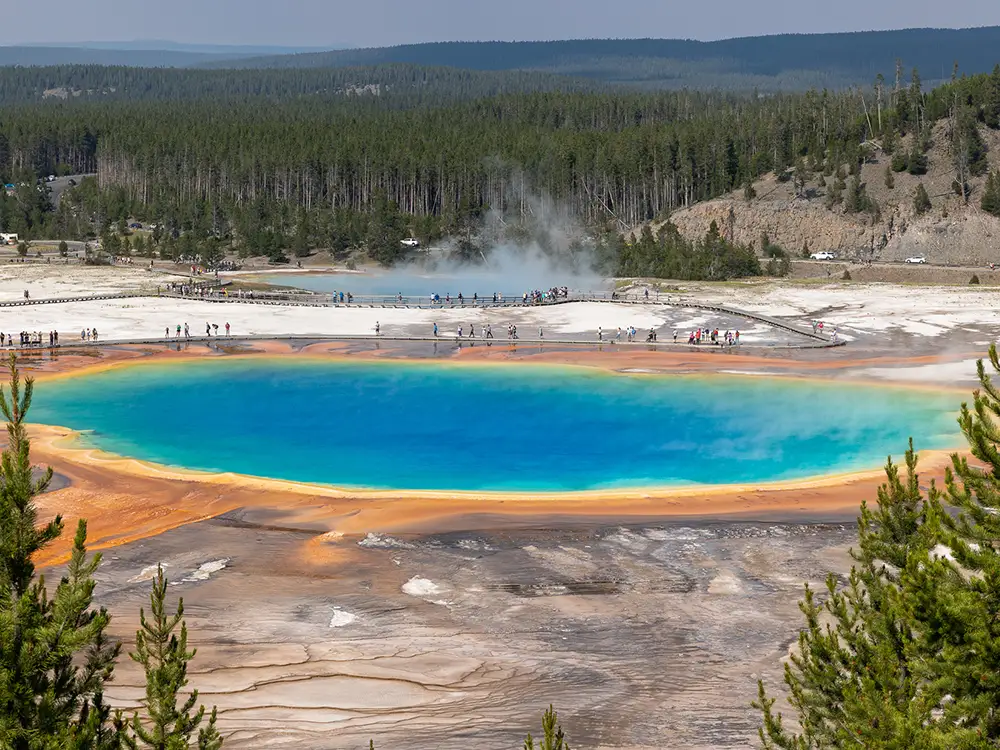
Sunlight falls on Morning Glory Pool in Yellowstone National Park and illuminates the green, yellow, and blue.
Morning Glory Pool in Yellowstone National Park.
photo by: Brandenburg, J

A clear day on Yellowstone Lake provides glass-like water and a view of the Grand Tetons in the distance.
A perfect day for seeing the Grand Tetons from a sea kayak.
photo by: Fitz-Roy, J


photo by: McKisson, D


photo by: Linhoff, T


photo by: Waring, Mary


photo by: Youngberg, Rich

the sea kayaks at rest on the shores of lake yellowstone

photo by: Baustian, C


[ Dates & Fees ]

Yellowstone Lake Backcountry Canoe

Paddle the World's First National Park

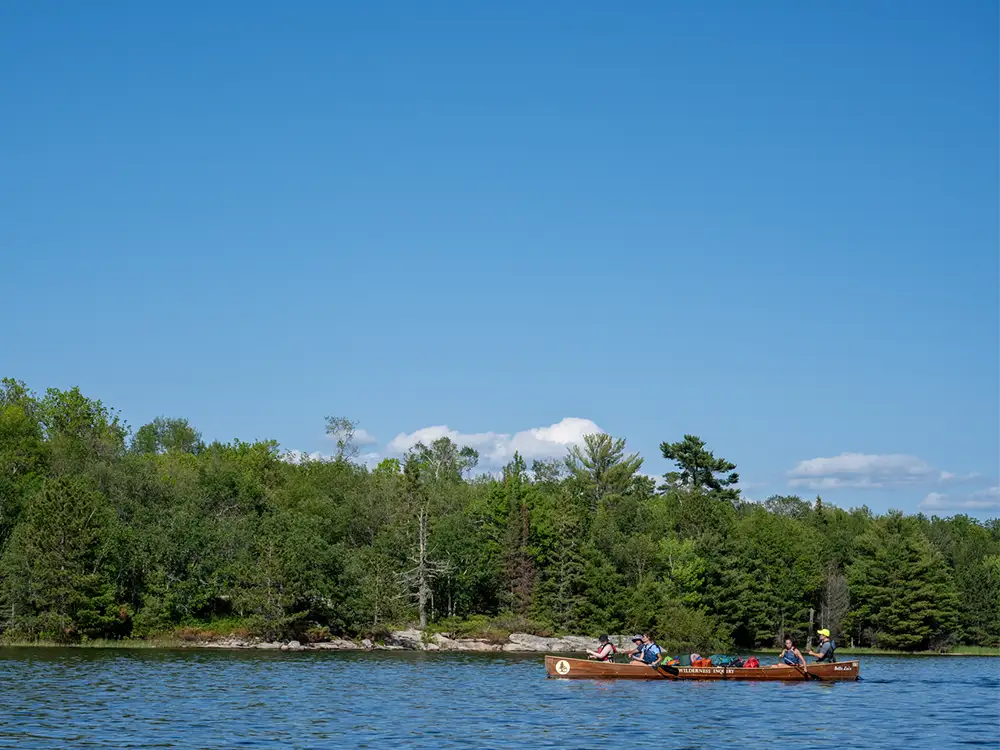
Perched on the Continental Divide, Yellowstone Lake is ringed with geyser basins and framed by the Absaroka Mountains. Travel in custom-built, 24-foot Voyageur canoes that hold 6-8 people, or Minnesota-4 canoes that fit 3-4 people. These canoes were designed specifically for big lakes and provide an ideal way to see this national treasure in safety and style. Look for deer, elk, moose, and evidence of Yellowstone's elusive timber wolf population. If you feel like fishing, the lake is full of trout. On the last day, take in some of the park's landmarks, including the breathtaking waterfalls of Yellowstone River's Grand Canyon, Old Faithful, and the enormous bison herds.

Sample Itinerary

Please note: While the itinerary presented is an accurate depiction of what your trip will be like, it is only an example. Our trips are real adventures in the outdoors--not pre-packaged tours that happen on a schedule.

DAY 1: Your trip starts in the afternoon at Grant Village in Yellowstone National Park. Help set up camp before preparing a fabulous meal. Afterwards, spend time getting to know your trip mates and share your expectations for the upcoming days while enjoying s'mores by the fire.

DAY 2: Awake early to pack up camp and drive to the West Thumb of Yellowstone Lake. Before heading out on the water, you will receive important safety tips and instruction on how to pack boats properly. Paddle east to a campsite on Breezy Point. You may pass by an active osprey nest and see bald eagles soaring overhead.

DAY 3: Paddle into the South Arm of the lake. Set up camp and then enjoy the afternoon sun, reading a book or trying to catch trout for dinner.

DAY 4: Break camp and move farther southeast to the Flat Mountain Arm region where you'll paddle near the base of Flat Mountain in a true wilderness area.

DAY 5: Paddle back to the Breezy Point area, enjoying the wildlife along the way and taking pictures of the mountainous scenic backdrop.

DAY 6: Break camp early in the morning and paddle back to Grant Village. The trip officially ends after lunch. If you use WI's van transportation, you will drive through the spectacular Beartooth Pass back to Billings, MT. Expect to return to Billings in the evening.

Travel, Terrain, Etc...

TERRAIN/ROUTE CHOICES: Yellowstone National Park has a wide variety of flora and fauna ranging from near-desert vegetation around the north entrance to sub-alpine meadows and forests on Mt. Washburn. Lodgepole pine forests cover 60% of the park. The shores of Yellowstone Lake are heavily forested, with accommodating and accessible campsites. Areas burned in the 1988 fire are distinguished by new growth and a variety of wildflowers. We will be on the lake, and campsites are pre-registered with the Park Service. Wind and weather may affect our routes.

TYPE OF TRAVEL/DISTANCE: You will travel in 24-foot cedar strip Voyageur or Minnesota-4 canoes that hold 6-8 or 3-4 paddlers respectively, plus all necessary gear. They are fast and stable boats, designed specifically for trips on big water. An average day's travel consists of 4-6 hours of paddling, depending on weather conditions. Travel distances vary from 7-12 miles per day. There are no portages on this trip. To protect the environment, WI uses Leave No Trace camping techniques.

WEATHER: Temperatures in the summer months range from 25 F to 90 F. Daytime temperatures are usually in the 70s with occasional 80s. Thundershowers are frequent, but they are usually of short duration. You should expect at least a day or two of rain.

ACCOMMODATIONS: This is a camping trip. At night you will sleep in a comfortable Eureka tents. Typically, there are 3 people per 4 person tent (although other arrangements can be made). Bathroom facilities consist of an outhouse or a foldable commode chair set up in a privacy tent. We make every effort to ensure privacy and cleanliness. Pay showers are available on

YOUR GROUP: The group size ranges from 8 to 10 participants, plus 2 or more Wilderness Inquiry staff. Each group consists of people of various ages, backgrounds and abilities, including people with disabilities. Our trips are cooperative in nature. WI staff will assist you in whatever areas you need, however most people pitch in where they can. Part of the adventure involves learning about daily camp activities.

EQUIPMENT AND CLOTHING: If you are new to outdoor activities, you need not spend a lot of money on gear. Wilderness Inquiry will provide all necessary canoeing and camping equipment. All you need to provide is your personal gear, such as clothing and a sleeping bag. A detailed equipment list will be sent to you upon confirmation of your participation. If you need to borrow personal gear, that can usually be arranged.

LEVEL OF DIFFICULTY: No previous experience is needed to complete this trip.

[ Dates & Fees ]      


Yellowstone National Park is a land of superlatives. Old Faithful geyser and other thermal features. Grizzly bears, bison, and wolves; bighorn sheep, elk, and antelope. Mountains. The Grand Canyon of the Yellowstone. And the magnificent Yellowstone Lake.

The natural wonders of Yellowstone National Park have awed generations of explorers, visitors, scientists, and tourists since the 19th century. Explorers from the earliest expeditions were considered liars or lunatics, their descriptions of the region seemed so fantastic. A national land preservation movement began with the Yellowstone National Park Act of 1872, which created the park to preserve the watershed of the Yellowstone River “for the benefit and enjoyment of the people.” Yellowstone became the world’s first designated national park.

The geologic features of Yellowstone have attracted visitors from all over the world. Mountain-building processes, including volcanic eruptions, uplift, and faulting, have created mountains, basins, and calderas. Melting glaciers created fast-flowing rivers that carved deep canyons. Yellowstone receives great acclaim for its 10,000 thermal features, including geysers, hot springs, mudpots, and fumaroles. In addition to the geology and breathtaking scenery of the region, Yellowstone visitors experience an abundance of wildlife.

Yellowstone National Park shelters the largest concentration of free-roaming wildlife in the lower 48 states. Herds of bison migrate into the valleys to graze. Powerful and elusive grizzly bears prowl the backcountry. The park provides habitat for over 50 other mammals including: wolves, black bears, mule deer, bighorn sheep, moose, elk, and pronghorn antelope. Nearly 300 species of birds breed or migrate through Yellowstone.

Yellowstone National Park encompasses over 2.2 million acres, a huge region larger than both Delaware and Rhode Island combined. Unlike those states, Yellowstone has relatively few developed areas. Most visitors tend to stay near these developed areas. Few people venture from the roads. This is the reason an experience with Wilderness Inquiry will be unique. Although our groups take in some of the more popular attractions, they will also venture away from the roads and trails as we paddle on Yellowstone Lake.

Formed in a volcanic caldera, Yellowstone Lake plunges 390 feet in depth and encompasses 110 miles of shoreline. At about 87,000 acres in size, it ranks as the largest lake in North America above 7,000 feet in elevation. Lake trout and cutthroat trout have the run of the lake, as they’re at the top of the food chain that originates near hot vents on the lake bottom. The warm water from the vents supports bacteria that feed on the released sulfur and forms the base of the food chain. You don’t have to tote a rod and reel to appreciate the world-renowned trout fishing in Yellowstone. Thousands of people every year flock to bridges that pass over crystal clear waters just to view the colorful trout. Fishing Bridge, near the outlet of Yellowstone Lake, provides one popular spot to watch fish.

Yellowstone offers a truly unique wilderness environment. Exploring its backcountry and solitude is just the ticket for fully appreciating its diversity of wildlife and geologic drama.


For more information, visit these links:

National Park Service - Official Yellowstone National Park Website

The Total Yellowstone Page

Yellowstone Net

YellowstoneNationalPark.com

American Park Network - Yellowstone

Yellowstone in Life Pages

Yellowstone in Wikipedia

[ Dates & Fees ]


2012 Dates   Fee Registration
07/27/2012 - 08/01/2012 Veterans' Trip $100

Transportation

This trip officially begins at the Grant Village Campground in Yellowstone National Park on the morning of the first day of the trip. You can take your own transportation or use WI’s van transportation from Billings. Detailed meeting place instructions will be sent to you when you are confirmed for the trip.

Meeting Places: Additional Round-trip Fee:
Minneapolis - Wilderness Inquiry Headquarters $175 per person
Billings, MT $95 per person
Grant Village Group Campsite $0 (No charge)
Printer Friendly Page
printer friendly
Quick Trip Facts:
  • 6 days, 5 nights
  • 2 Wilderness Inquiry Staff
  • All trail meals and snacks included
  • Eureka Tents, group camping & cooking gear
  • Lotus PFD, 24 foot Voyageur canoe, paddle
  • Visit Yellowstone River's Grand Canyon and Old Faithful
  • Adaptive gear as needed


Kya Marienfeld is one of our Yellowstone guides. She's an excellent naturalist.