|
|
|
|
Wabakimi Wilderness Canoe Trip
Wilderness canoeing at its finest.
Click any thumbnail for larger image:

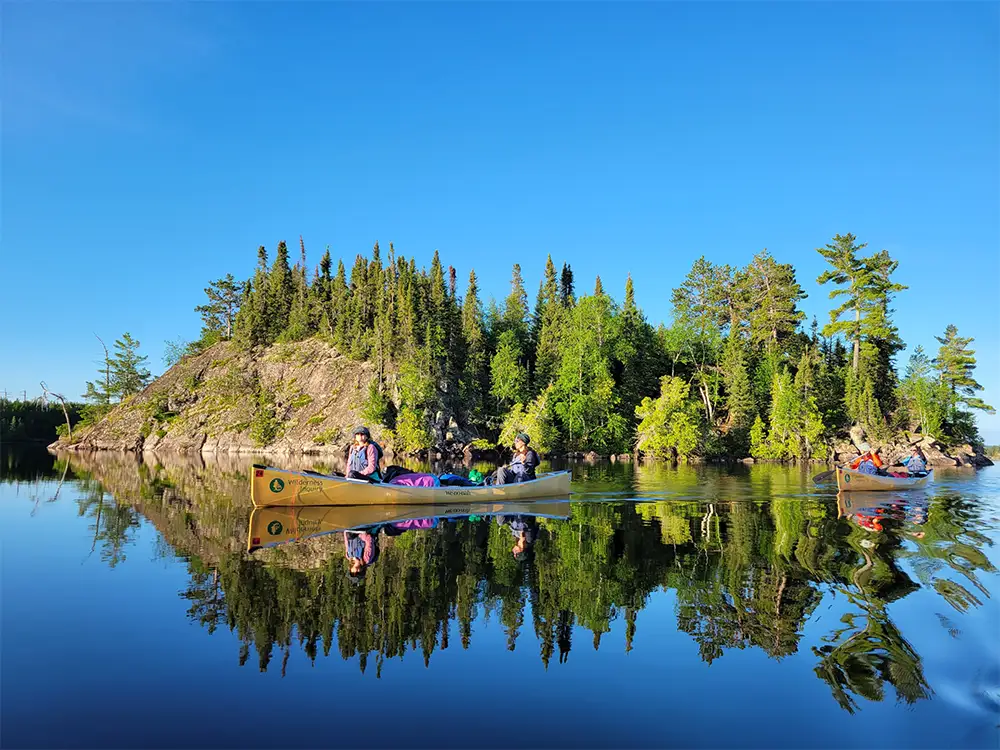
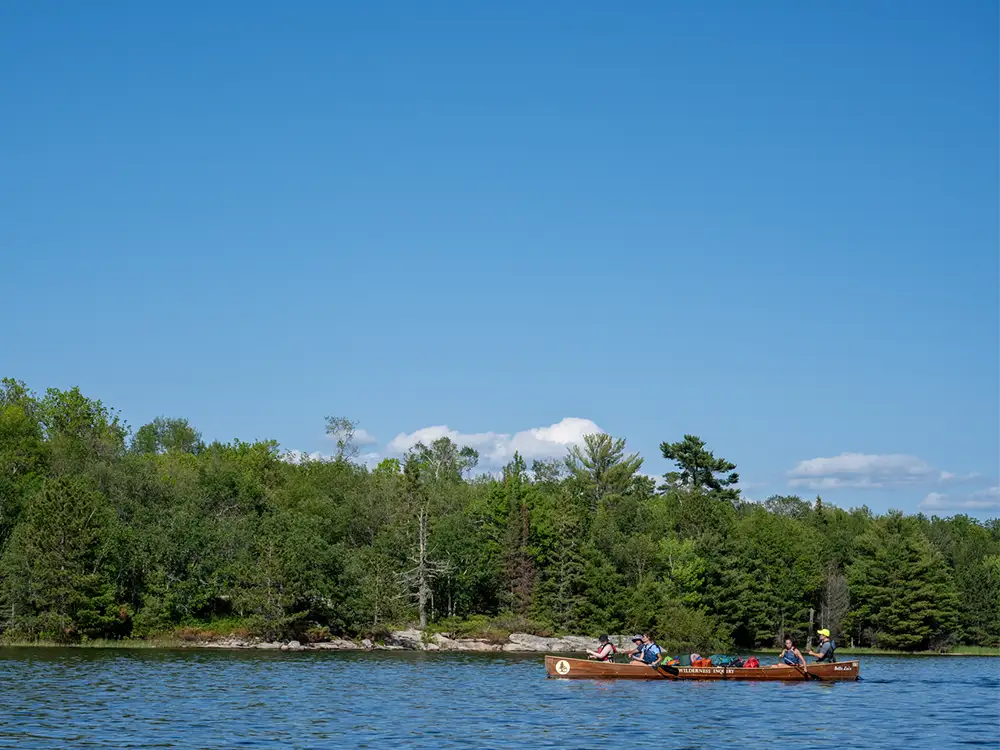
Canoeing across Caribou Lake in Wabakimi Provincial Park
photo by: Lais, G
|

Fun on a rock outcropping on Smoothrock Lake in Wabikimi Provincial Park.
photo by: Chew, D
|

Tranquility at dusk in this extraordinary wilderness. There is nothing like Wabikimi left in the United States.
photo by: Chew, D
|

Tom pulls in a nice Northern Pike. We let those go. Actually we caught so many fish we let most of them go, keeping only walleyes of a certain size to eat.
photo by: Lais, G
|

Getting an assist through a small Beaver Dam on our way down to Kananaskis Lake.
photo by: Chew, D
|

Andrew contemplates life on shore in Wabikimi Provincial Park
photo by: Sheffield, A.
|

Shore lunch deep in the Canadian Wilderness in Wabikimi Provincial Park.
photo by: Schurke, P
|

Wabikimi is a land of roaring waterfalls. This photo is from the Kopka River Gorge -- truly a special place.
photo by: Sheffield, A
|

Tom Nelson in Wabakimi Wilderness. Tom is on our board of directors. He knows how to paddle, too!
photo by: Lais, G
|

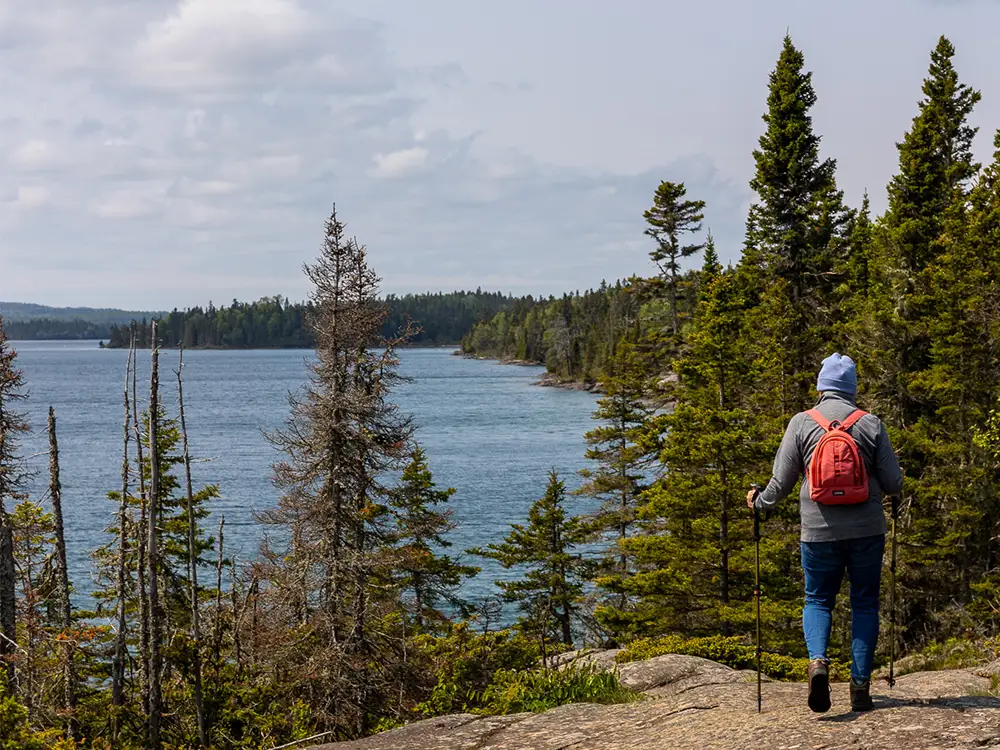
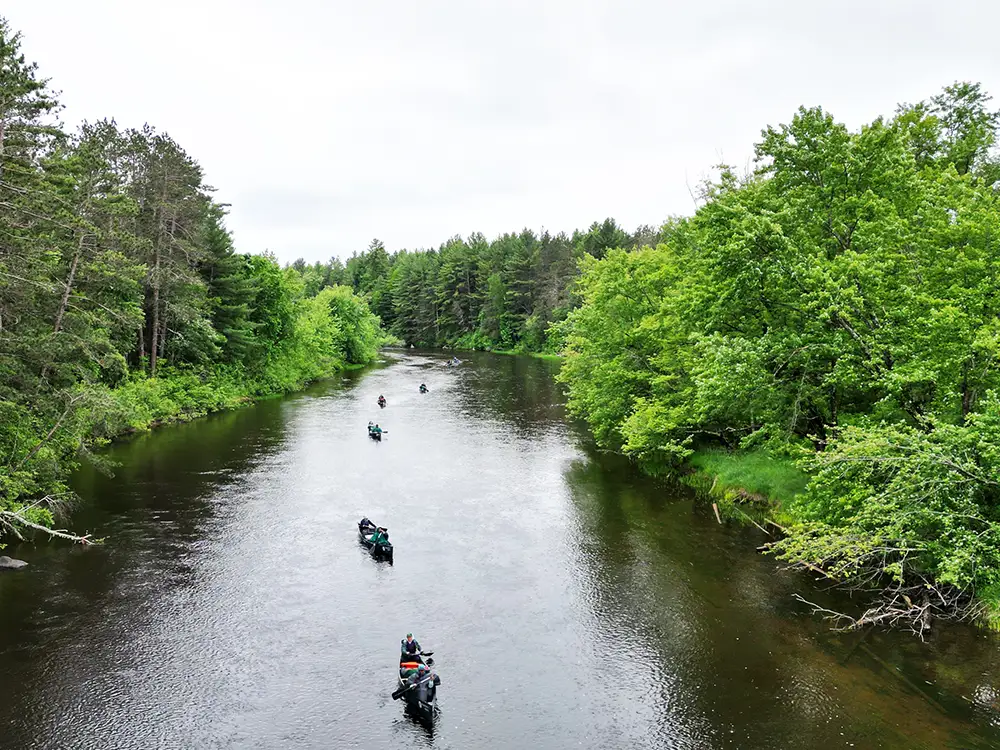
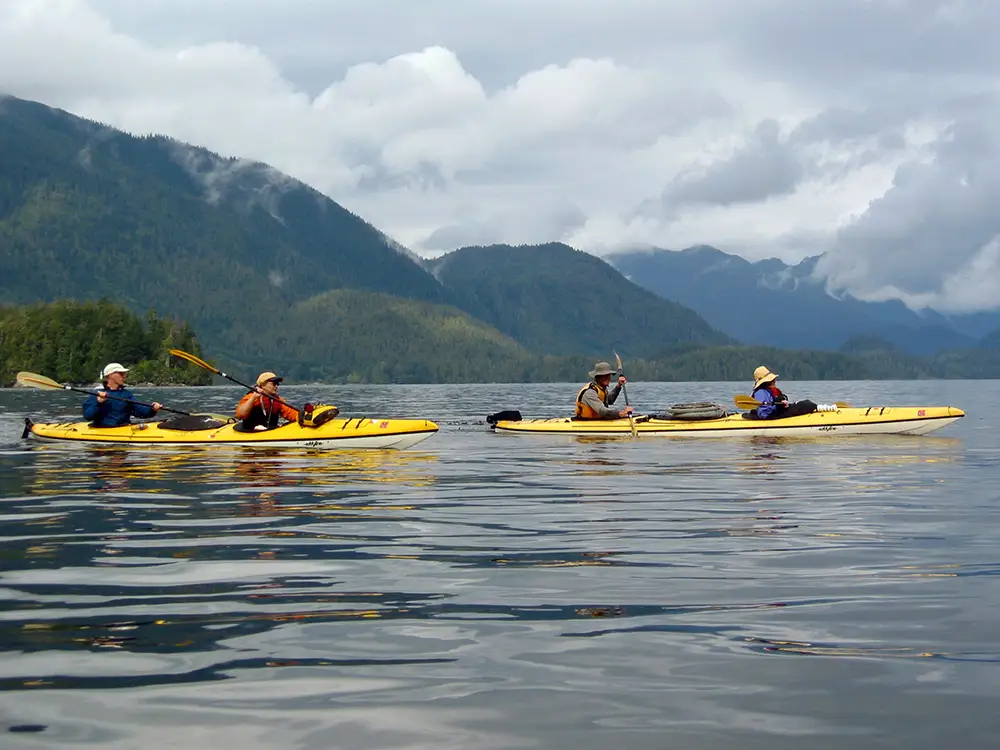
Canoeing in Wabikimi Provincial Park. This is a great place for a north country canoe trip.
photo by: Schurke, P
|

Our friends in Collins, Ontario. We stopped in to visit this native community and were met with great warmth and hospitality. Paul has a great story abou a dog named "peanut." Ask him about it sometime.
photo by: Lais, G
|

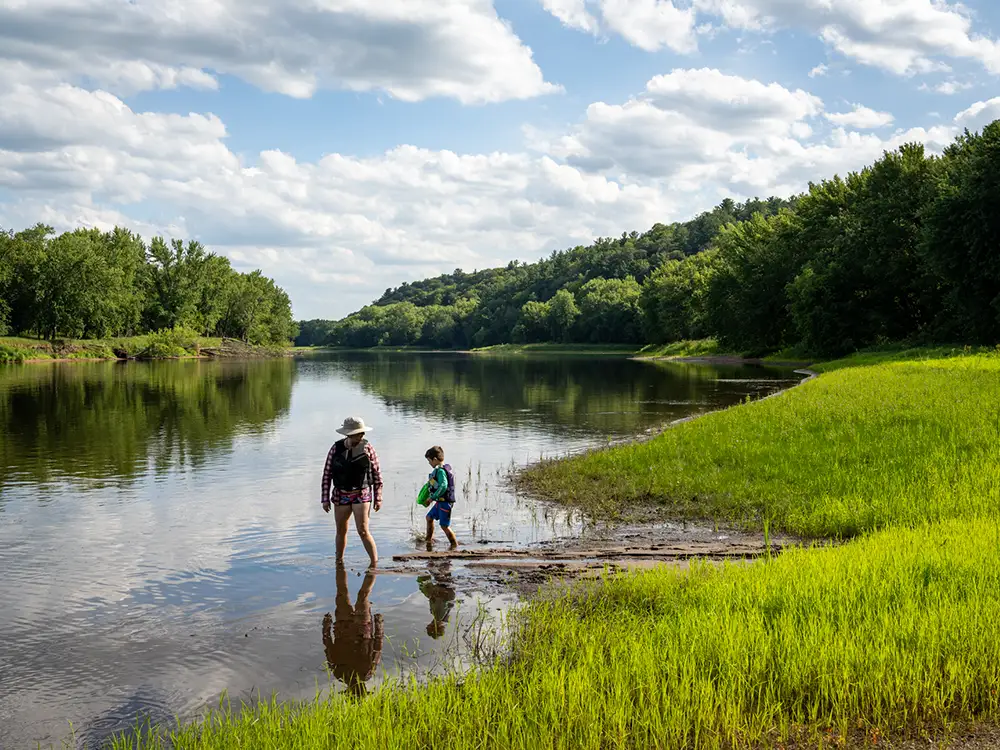
Paul Schurke chills in the stream in Wabikimi Provincial Park.
photo by: Schurke, P
|

Sailing on Caribou Lake in Wabikimi Provincial Park.
photo by: Schurke, P
|

Paddling a tranquil lake in Wabikimi Provincial Park.
photo by: Cunningham, Bill
|

Bill prefers Wabikimi to almost any other area he's paddled-and he's paddle the Boundary Waters Canoe Area, most of NW Ontario, Manitoba and more.
photo by: Cunningham, Bill
|
Page 1 of 2 | Next | Last
[ Dates & Fees ]
|
|
Wabakimi Wilderness Canoe Trip
Wilderness canoeing at its finest.
If you are looking for the very best in wilderness canoeing, Wabakimi Provincial Park is hard to beat. Paddle and portage through the stark beauty of the Wabakimi wilderness area, halfway between Thunder Bay Ontario and and Hudson Bay. The five million acre Wabakimi wilderness area includes over 1800 miles of lakes and rivers. You will marvel at the notion that a wilderness this vast still exists in North America. Choose from dozens of canoe routes that offer spectacular views, exciting fishing, and thundering water falls. Dine on your fishing and berry picking haul--as well as the abundance of good food that we bring. Wabakimi is a true wilderness area, remote, pristine and as wild as any place on earth.
Sample Itinerary
Please note: While the itinerary presented is an accurate depiction of what your trip will be like, it is only an example. Our trips are real adventures in the outdoors--not pre-packaged tours that happen on a schedule.
DAY 1: Travel from Minneapolis to the remote Wabakimi Wilderness Area--a long drive but well worth it. Get to know your trip mates and get a good nights rest at the Wabakimi Wilderness Eco-Lodge in Armstrong, ON.
DAY 2: Rise early, get your coffee and breakfast and shuttle to the put-in spot at Caribou Lake. After a brief introduction, load your gear into the canoes and slip into the water.
DAYS 3-7: There are dozens of canoe routes in the Wabakimi Wilderness. Some routes are more challenging than others, but all offer the very best in wilderness canoeing. Regardless of the route choice, you will paddle and portage through the stark beauty of this northern canoe country. Wabakimi's boreal forest consists of black spruce, tamarack and jack pine, and supports all of the species that originally lived here--even the Woodland Caribou. There are also black bears, lynx, white pelicans, and plenty of gray wolves in the park. The terrain is rugged, with rivers connecting placid lakes carved out of the granite of the Canadian Shield.
One of the best features of the Park is that relatively few people camp here. You will enjoy campsites that are thick with Caribou Moss and lush vegetation--like Minnesota's Boundary Waters used to be 50 years ago.
Another highlight is the fishing -- most people consider Wabakimi the very best walleye fishing they have ever encountered. It is not uncommon for a group to catch a superb walleye dinner for nine in less than an hour. There's a place called the "walleye kitchen" on the Boiling Sands River that cannot be beat! You can also hike through the woods and fill your hands with blueberries, some of which you might keep for delicious pancakes.
We always try and schedule a "layover" day on this trip, usually picking a choice campsite where you can stretch out in the sun and catch up on a good book. There are several great sand beaches for swimming, and numerous dunk holes where you can cool down in the sky blue waters.
DAY 8: Rise early on your last day in the wilderness to see the sunrise and say good-bye to your home of the last week. Your goal for the day is to paddle down to the take out and load up the waiting van with canoes and memories. Begin the long, but beautiful drive back to Minneapolis and arrive at Wilderness Inquiry around 10 pm.
Travel, Terrain, Etc...
TERRAIN/ROUTE CHOICES: This area lies on the Canadian Shield, characterized by exposed granite with a thin layer of top soil, the result of glaciers scraping and grinding as recently as 10,000 years ago. Wheelchair users can expect difficulty at times (rocks, mud, logs, etc.). Generally, though, the lakes and rivers make this area quite accessible.
TYPE OF TRAVEL/DISTANCE: You will travel in 17-foot We-No-Nah Champlain canoes, which hold two to three paddlers, plus all necessary gear. An average day's travel consists of 3-6 hours of paddling, depending on the weather. Travel distances vary from 9-20 miles per day with the exception of scheduled layover days. There will be portages (short trail crossings) through the course of the trip. Portaging can be challenging, but it also offers a chance to get out of the canoes and enjoy the woods. To protect the environment, WI uses Leave No Trace camping techniques.
WEATHER: Temperatures in the summer months range from 35 F to 85 F. Rainfall can vary, but you should expect one or two days of wet weather.
LODGING/BATHROOM FACILITIES: This is a camping trip. At night you will sleep in a comfortable Eureka Timberline tent. Typically, there are 3 people per 4 person tent (although other arrangements can be made). We recommend that you bring your own personal sleeping bag and "camprest" foam core inflatable mattress (a limited number of sleeping bags and mattresses are available as loaners for individuals who need them). Bathroom facilities consist of a latrine in the woods--we travel light! We make every effort to ensure privacy and cleanliness.
GROUP SIZE: The group size ranges from 5 to 7 participants, plus 2 Wilderness Inquiry staff. Each group consists of people of various ages, backgrounds and abilities, including people with disabilities.
CAMP CHORES: Our trips are cooperative in nature. WI staff will assist you in whatever areas you need, however, we ask that you pitch in when you can. Part of the adventure involves participating in daily camp activities such as cooking and dishes.
EQUIPMENT AND CLOTHING: If you are new to outdoor activities, you need not spend a lot of money on gear. Wilderness Inquiry will provide all necessary canoeing and camping equipment. All you need to provide is your personal gear, such as clothing and a sleeping bag. A detailed equipment list will be sent to you upon confirmation of your participation. If you need to borrow personal gear, that can usually be arranged.
The fishing is excellent in Wabakimi. We encourage you to bring a collapsable rod and reel. Walleye and Northern Pike bite on 1/2 to 3/8 oz jigs and various spoons. You will need to purchase a non-resident Ontario fishing license for about $20. These can be purchased at the lodge on the first night.
LEVEL OF DIFFICULTY: While not technically difficult, this trip can be strenuous. We do not recommend it if you are in poor physical condition. No previous experience is needed to complete this trip, but you do need to be able to carry packs and items across difficult trails.
BORDER REQUIREMENTS: This destination is in Canada, and you will need a valid passport to cross the border.
 |
Wilderness Inquiry is proud to serve Caribou Coffee on all our trips. Great food, great coffee, and great company are just some of the ingredients that make Wilderness Inquiry trips special.
|
[ Dates & Fees ]

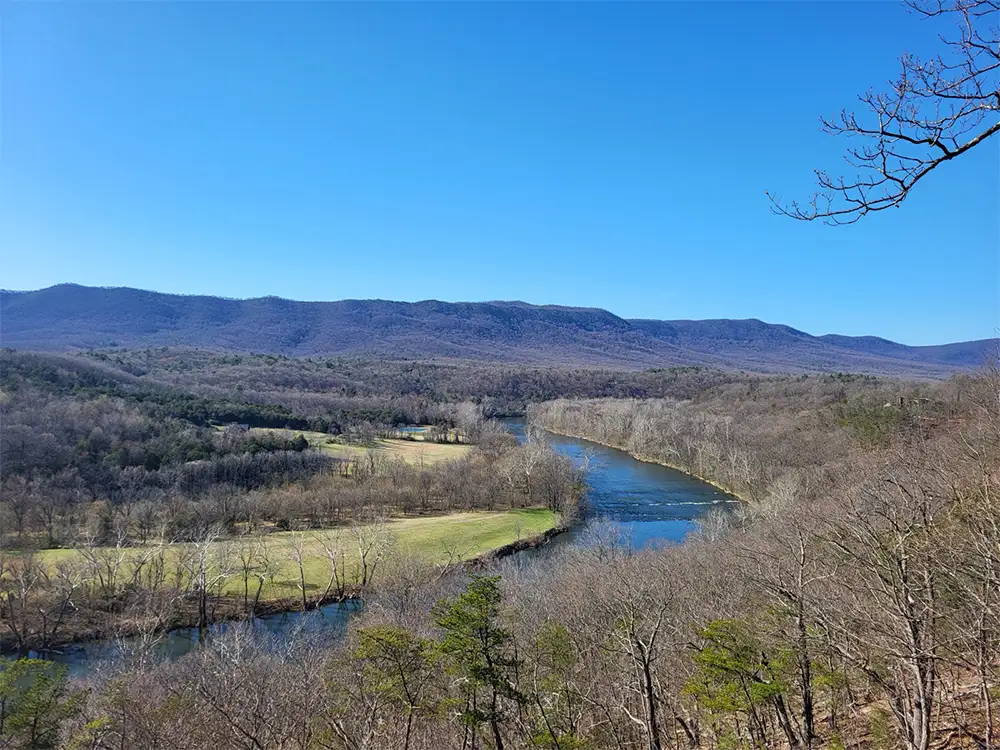
Wabakimi Provincial Park is a world-class canoeing and recreational area in the heart of Northwestern Ontario. Home of the elusive woodland caribou, and renowned for its high quality fly-in fishing and hunting, it is one of the world's largest Boreal Forest reserves and wilderness canoeing areas.
The Canadian Shield
The park lies within the Superior Structural Province of the Precambrian Shield, an extensive rock type that underlies half of Canada and is comprised of some of the oldest rocks on earth. A wide range of intrusive and metamorphic rocks form a gently rolling terrain of rock ridges and shallow lake basins.
The Boreal Forest
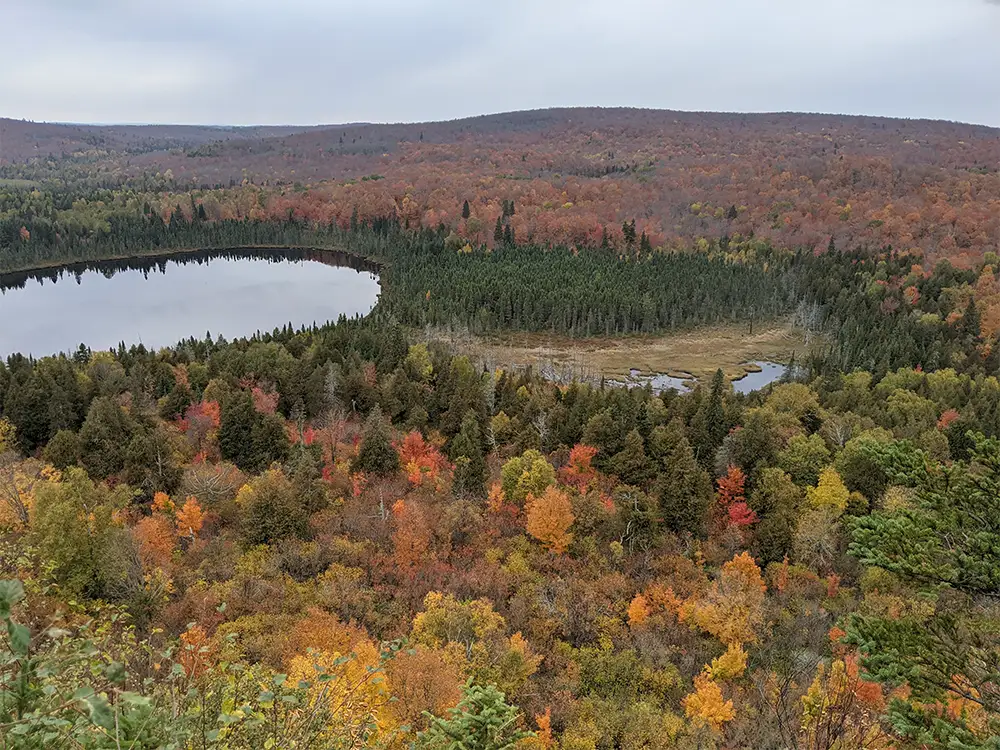
Wabakimi Provincial Park is situated entirely within the Boreal Forest, a broad belt of coniferous forest that stretches between the mostly treeless arctic/subarctic region to the north, and the mixed hardwood-coniferous transition forest of the Great Lakes-St. Lawrence Forest Region to the south. The waters of glacial Lake Agassiz have denuded many upland areas, producing expanses of dry lichen rockscapes which support valuable caribou habitat. Typical boreal tree species such as black spruce and jackpine, with occasional trembling aspen and white birch, dominate upland areas, while black spruce and larch vegetate the wet, organic deposits commonly found in bedrock depressions.
Wildlife of Wabakimi
The wildlife species of the park are typical of the Boreal Forest region. These species include large game animals such as moose, woodland caribou, and bear; as well as smaller mammals such as snowshoe hare, least chipmunk, red squirrel, lynx, fox, marten, weasel, timber wolf, beaver, muskrat, otter and mink. Typical bird species include raven, grey jay, osprey, bald eagle, boreal owl, spruce grouse, common loon, black duck, common goldeneye, hooded merganser, herring gull, ovenbird and thrushes.
The Woodland Caribou of Wabakimi Provincial Park
At one time, woodland caribou enjoyed a broad geographic distribution throughout Northwestern Ontario and the northern United States. Throughout most of the 20th century, caribou populations declined or were eliminated in the southern portions of their historic range in Ontario. Today they are found only in scattered herds throughout the Boreal forest and are considered a vulnerable species.
An estimated 300 woodland caribou trek the lichen-rich, granite hills of Wabakimi Provincial Park. Unlike their social, northern cousins, the barren ground caribou, these elusive woodland species seldom form large groups or herds. Their survival strategy seems to be based on a pattern of dispersion, with individuals living and travelling alone or in small groups. Scattered about the hinterlands in such few numbers, may give each individual caribou a better chance of eluding predators, especially timber wolves, or possibly lynx and black bear.
Cultural Heritage
The park waterways have been travelled for centuries by the Ojibway and most portages in the region have evolved from this historic use. Ancient campsites, artifacts and pictograph (rock painting) sites found throughout the park tell some of the Wabakimi story.
Evidence suggests that people have called Wabakimi ‘home' for about 7000 years, ranging throughout the area in small family groups, stopping where fish and game were plentiful, or the berries ripe. To survive, these people needed an in-depth understanding and appreciation for their environment.
Source: www.wabakimi.on.ca/wabakimi
For more information, visit these links: An Explorer's Guide to Wabakimi Provincial Park Ontario Parks - Wabakimi Our partners on our Wabikimi trip, Bruce Hyer
[ Dates & Fees ]
WI leads trips to this destination but currently has no dates scheduled. If you have a group of people interested, we can set up a customized adventure just for you! Please contact us if you are interested in a group trip to this destination.
info@wildernessinquiry.org
612-676-9400
800-728-0719
(Join our waiting list to be notified when WI schedules a trip to Wabakimi Wilderness Canoe Trip)
|

printer friendly |
|
- 8 days, 7 nights
- 2 Wilderness Inquiry Staff
- Lodge accommodations the first evening
- Spectacular fishing
- All meals and snacks included
- Eureka Outfitter Tents, group camping & cooking gear
- Lotus PFD
- We-No-Nah Champlain canoes
- Adaptive gear as needed
|
|
|
|
|
|