Wilderness Inquiry
 home   register   about us   programs   get involved   support wi   news   contact us 
General Trip Info

Slate Islands Sea Kayak Expedition

Caribou and contentment off the northernmost shore of Lake Superior!

Click any thumbnail for larger image:

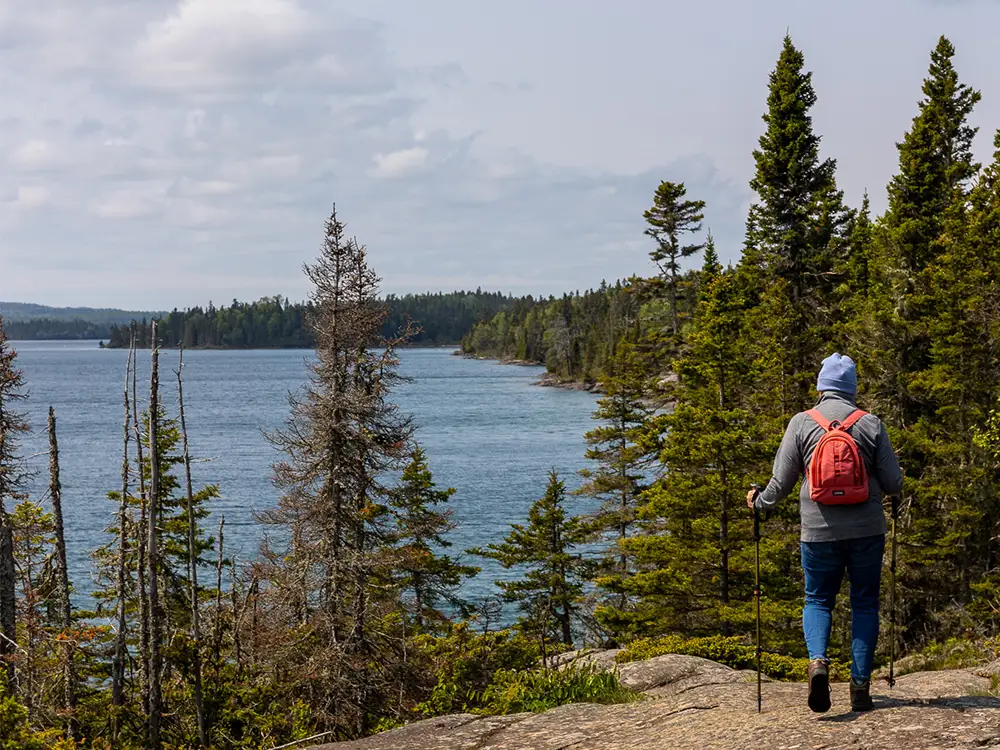
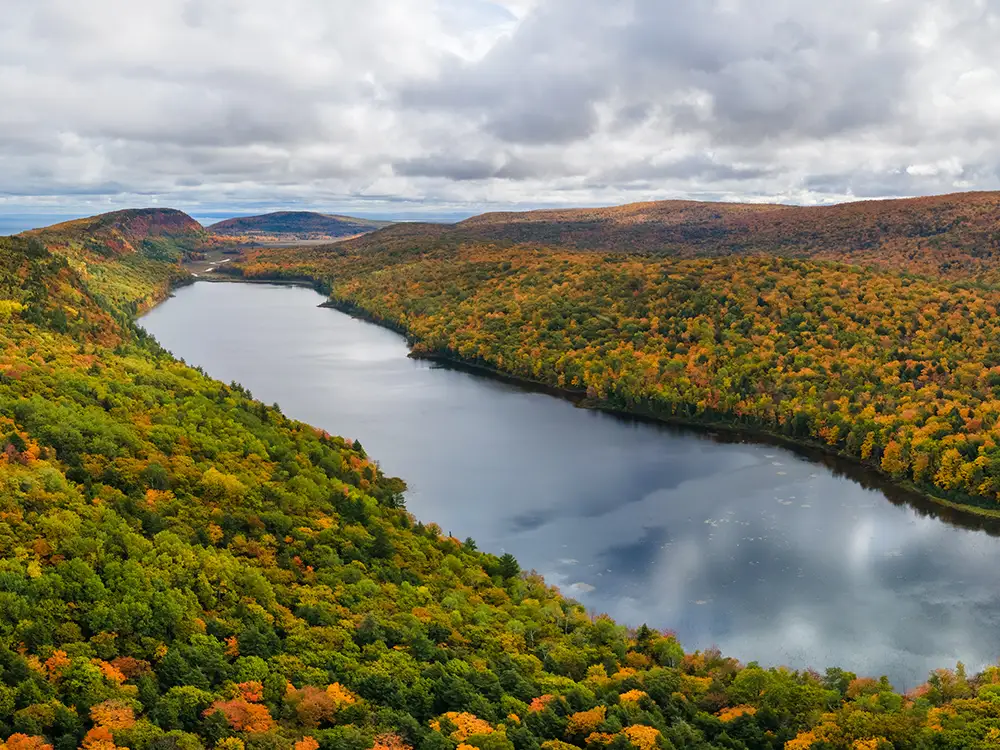
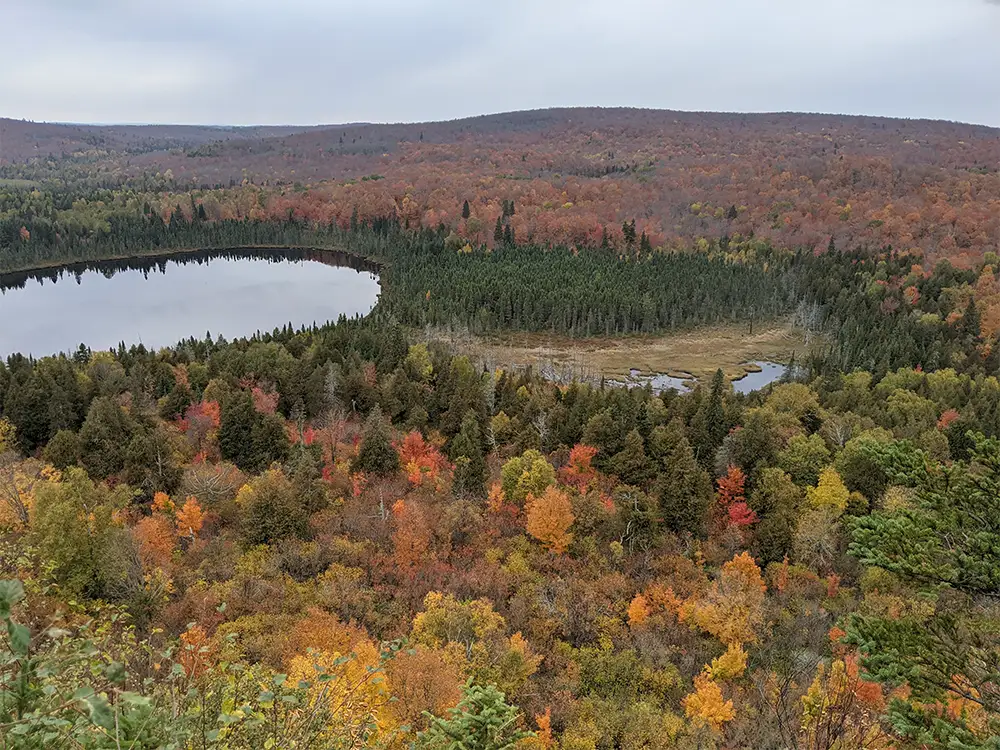
Beautiful view from Slate Islands on Lake Superior.
The Slate Islands were created by meteor impact millions of years ago.
photo by: Brandenburg, J

A caribou in open water along the Slate Islands on Lake Superior in the fall.
The Slate Islands are known for a caribou herd which migrated across frozen Lake Superior in the 1900's
photo by: Brandenburg, J

Food is laid out on a picnic table in the shape of a fish in the Slate Islands.
We love good food in the Slate Islands!
photo by: Johnson, G

A tandem sea kayak passes by a caribou on Patterson Island.
Slate Island caribou aren't used to seeing people so they're not afraid to get close
photo by: Tsong, R

A caribou graves among wildflowers in the Slate Islands of Ontario.
Caribou on Pearl Island
photo by: Tsong, R

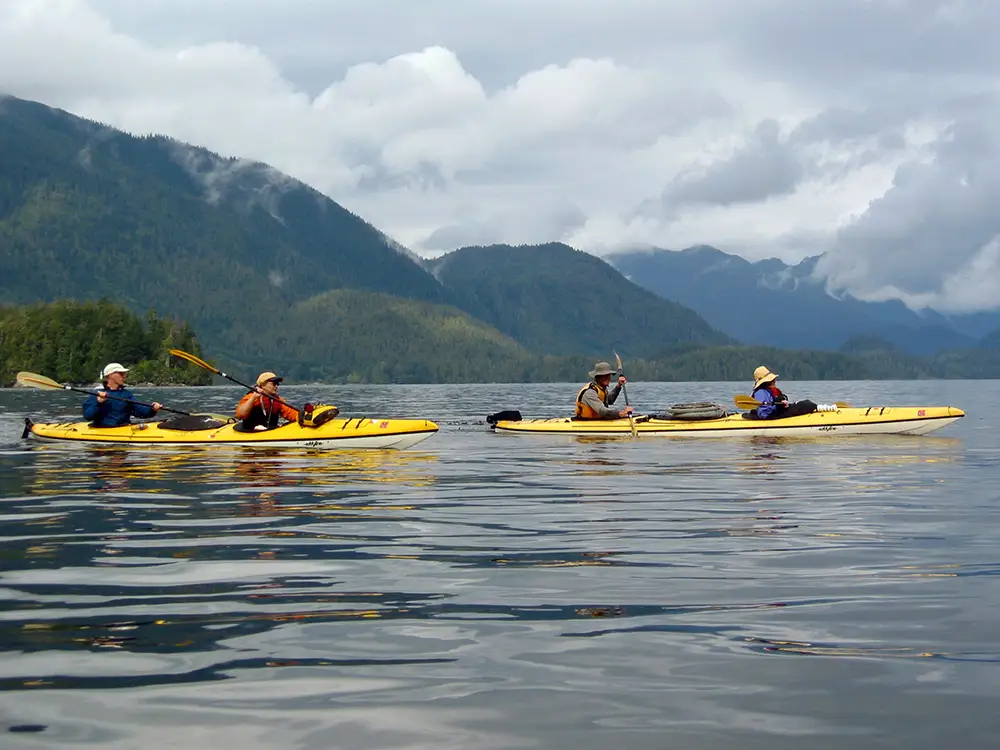
Three yellow tandem sea kayaks paddle along the coast of the Slate Islands on Lake Superior.
Kayaking near Cove Island and looking for caribou
photo by: Tsong, R

Four sea kayaks in the fog near the Slate Islands on Lake Superior.
View from the bow in a foggy Lake Superior morning
photo by: Tsong, R

Three sea kayaks paddle through the fog in the Slate Islands.
Misty morning outside McGreevy Harbor
photo by: Tsong, R

Pulling the boats on the beach of Patterson Island on Lake Superior.
Preparing to set up camp on Patterson Island
photo by: Bolvin, Don

Kristin poses next to two yellow sea kayaks on the shore of Pearl Island.
Christine with Grand San Juans kayaks in the Slate Islands
photo by: Reily, C

Two tandem sea kayaks paddle around the rocky shore of Shell Island on a sunny day.
Paddling around Shell Island on a beautiful day on Lake Superior
photo by: Reily, C

Mary and Diana smile in front of Lake Superior on the Slate Islands Sea Kayaking Expedition.
Mary and Diana enjoy the Slate Islands
photo by: Reily, C

A caribou swims with only its head above water in the Slate Islands of Lake Superior.
Caribou goes out for a swim in Lake Superior
photo by: Colaizy, L

A caribou tests the waters of Lake Superior at sun set in the Slate Islands.
Caribou on Patterson Island
photo by: Unknown

Four participants pose at an overlook near McGreevy Harbor in the Slate Islands.
The group at McGreevy Harbor
photo by: Fitz-Roy, J

The sun sets over Lake Superior's Slate Islands
Sunset over the Slate Islands
photo by: Mizuno, C

Going for a swim in the Slate Islands
A dip in the lake.
photo by: Reily, C

A young Caribou inspects the Slate Islands trip participants
Slate Islands Caribou
photo by: Colaizy, L


[ Dates & Fees ]

Slate Islands Sea Kayak Expedition

Caribou and contentment off the northernmost shore of Lake Superior!

The Slate Islands are known for a caribou herd which migrated across frozen Lake Superior in the 1900's

Journey through Ontario's Slate Islands, an archipelago at the northern tip of Lake Superior. Kayak through rugged bays and inlets. View unusual geologic features formed by an enormous meteorite impact that created the islands more than a billion years ago. The Slates are home to the largest known woodland caribou herd that has no predators, so you are likely to catch a glimpse of caribou swimming across bays or walking along shores–some even come to visit our camp! Take a break from paddling and hike to the lighthouse where the view over Lake Superior is breathtaking! This trip offers a great mix of cultural and natural history that will help enrich your experience.

Sample Itinerary

Please note: While the itinerary presented is an accurate depiction of what your trip will be like, it is only an example. Our trips are real adventures in the outdoors--not pre-packaged tours that happen on a schedule.

DAY 1: Your trip begins this evening in Terrace Bay, Ontario, on the northern edge of Lake Superior. Ride with the group from Minneapolis or meet in Terrace Bay. Discuss expectations and get started on sorting and sizing gear.

DAY 2: Rise early to catch the shuttle to the Island group. Once on Patterson Island, you'll set up camp early in McGreevy Harbor and have time to explore the island group's inner passage. Sheltered from harsh weather, McGreevy Harbor is also the most likely place to see the Islands' abundant wildlife. If we are quiet, we may even catch a glimpse of one of the islands' hundreds of woodland caribou.

DAY 3: After breakfast with the group, we'll set out to explore the rugged east coast of Patterson Island. The island should shelter you from the wind, as you head into Lake Superior. Our destination for the day is the sheltered bay behind Cove, Shell, and Pearl Islands. Camp and lounge on a beautiful stone beach that extends up into the woods.

DAY 4: Today is the day to explore the south side of Patterson. We'll glide into Sunday Harbor and beach the kayaks to investigate the Slate Islands Lighthouse. A challenging trail leads to the lighthouse, but our reward is a breathtaking view out over Lake Superior. After lunch we'll continue on along the south shore, around Horace Point and into Horace Cove, where we will set up camp for the evening.

DAY 5: Our goal for the day is to complete the circumnavigation of the island. This western coast is the scenic highlight of the trip, with lovely beaches, cliffs, and forests. We'll pass by Edmonds and McColl Islands and camp back in McGreevy Harbor. We may even spot more caribou.

DAY 6: Over breakfast we'll be on the lookout for the arrival of the charter shuttle, which will take us, our gear and the kayaks back to the mainland. Take one last look at these lovely islands. Once back in Terrace Bay, we leave for home early afternoon.

Travel, Terrain, Etc...

TERRAIN/ROUTE CHOICES: The Slate Islands are rugged, with rocky terrain, small bays, and points. The group is most mobile when in the kayaks. The Slates offer a wide range of route options from easy to difficult. There are numerous bays and inlets to explore, or we can choose to take a hike inland.

TYPE OF TRAVEL/DISTANCE: You will travel in 21-foot Grand San Juan sea kayaks, which hold 2 or 3 people plus all necessary gear. An average day's travel consists of 3-8 paddling hours depending on weather conditions. Be prepared for the possibility of a wind bound day. Travel distances vary from 8-14 miles each day. To protect the environment, WI uses Leave No Trace camping techniques. No previous experience is needed to complete this trip.

WEATHER: Temperatures in the summer months range from 45 F to 85 F. Rainfall can vary, but you should expect at least a day of rain. The weather is greatly affected by Lake Superior's large expanse of cold water. Lake Superior is notorious for sudden weather changes, we must always be prepared.

ACCOMMODATIONS: This is a camping trip. At night you will sleep in a comfortable Eureka Timberline tent. Typically, there are 3 people per 4 person tent (although other arrangements can be made). Bathroom facilities consist of an outhouse or a foldable commode chair set up in a privacy tent. We make every effort to ensure privacy and cleanliness.

YOUR GROUP: The group size ranges from 8 to 10 participants, plus 2 or more Wilderness Inquiry staff. Each group consists of people of various ages, backgrounds and abilities, including people with disabilities. Our trips are cooperative in nature. WI staff will assist you in whatever areas you need, however, we ask that you pitch in when you can. Part of the adventure involves participating in daily camp activities such as cooking and dishes.

EQUIPMENT AND CLOTHING: Wilderness Inquiry will provide all necessary kayaking and camping equipment. All you need to provide is your personal gear, such as clothing and a sleeping bag. A detailed equipment list will be sent to you upon confirmation of your participation.

[ Dates & Fees ]      


The Slate Islands are located 13 km off the shore of Terrace Bay and are only accessible by boat or plane, usually from Terrace Bay or Rossport. The Slates are composed of eight islands. The two largest, Patterson and Mortimer island, are surrounded by protected waters, coves, bays, and smaller islands. They are popular fishing spots and serve as a great place to pitch a tent. In 1985, the Township of Terrace Bay turned the Slate Islands over to the Ministry of Natural Resources and they were designated as a Provincial Park.

The Slate Islands' most recent distinction is the concentrated presence of woodland caribou. According to the Ontario Ministry of Natural Resources, it is the largest unpredated herd of this species known. The caribou arrived on the Slate Islands in the early 1900's, when Lake Superior froze over. The Lake had not frozen over again until the winter of 2002/ 2003. The freezing of the lake allowed for at least two wolves to cross over to the islands. Until then, caribou did well on the Slate Islands due to the lack of natural predators, and due to the lack of deer and moose who compete for food and carry a parasite that are lethal to caribou. Caribou can be seen frequently swimming across the bay or walking along the shore.

Another rare find on the Slate Islands is the presence of Arctic plant life. Dryasdrummondii is an arctic species which is usually found 1600km to the north. This species was found on the Southwest coast of the island primarily in rock pools. The second rare find was the Polygonunviviporum commonly known as smart weed. This species is considered a delicacy to the Inuit people and is normally found in the high Arctic areas. The plant grows in low lying mossy rock, and can usually be found on the northern shores of Greenland, Ellsemere Island and here on the Slate Islands.

Scientists believe that the Islands were created by an explosive event, most likely the impact of a large meteorite. By this theory, the Slate Islands represent only a small part of a much larger impact crater beneath the surface of Lake Superior, representing the bulls eye of the cosmic blow. The islands rise to nearly 400 feet, 122 m above lake level.

Buck Sharpton, staff scientist at NASA's Lunar and Planetary institute, says that the meteor that created the Slate Islands was about 30 kilometers in diameter. The asteroid plunged 3 km inside the earth. The meteorite, moving up to 20 km per second, vaporized in a blast equal to more than one million megatons (megaton= 1 million tons) of TNT. The Slate Islands are a tremendous resource for scientists to understand the science of asteroids collisions with plants and to offer clues about the next "Dinosaur Killer" meteor in the earth's future.

From www.terrace-bay.com/slateislands.html:


For more information, visit these links:

Slate Island Ontario Parks

Slate Islands Wikipedia

Images of woodland caribou

[ Dates & Fees ]


WI leads trips to the Slate Islands but currently has no dates scheduled. If you have a group of people interested, we can set up a customized adventure just for you! Please contact us if you are interested in a group trip to this destination.

info@wildernessinquiry.org
612-676-9400
800-728-0719

When do you want to go?

How many travelers in your group? A value is required.Invalid format.The entered value is less than the minimum required.The entered value is greater than the maximum allowed.


Printer Friendly Page
printer friendly
Quick Trip Facts:
  • 6 days, 5 nights
  • 2 Wilderness Inquiry Staff
  • All trail meals and snacks included
  • Eureka Outfitter Tents, group camping & cooking gear
  • Wetsuits
  • Lotus PFD
  • Eddyline Tandem Kayak
  • Lightweight Swift Paddle
  • Adaptive gear as needed


Caribou on Pearl Island