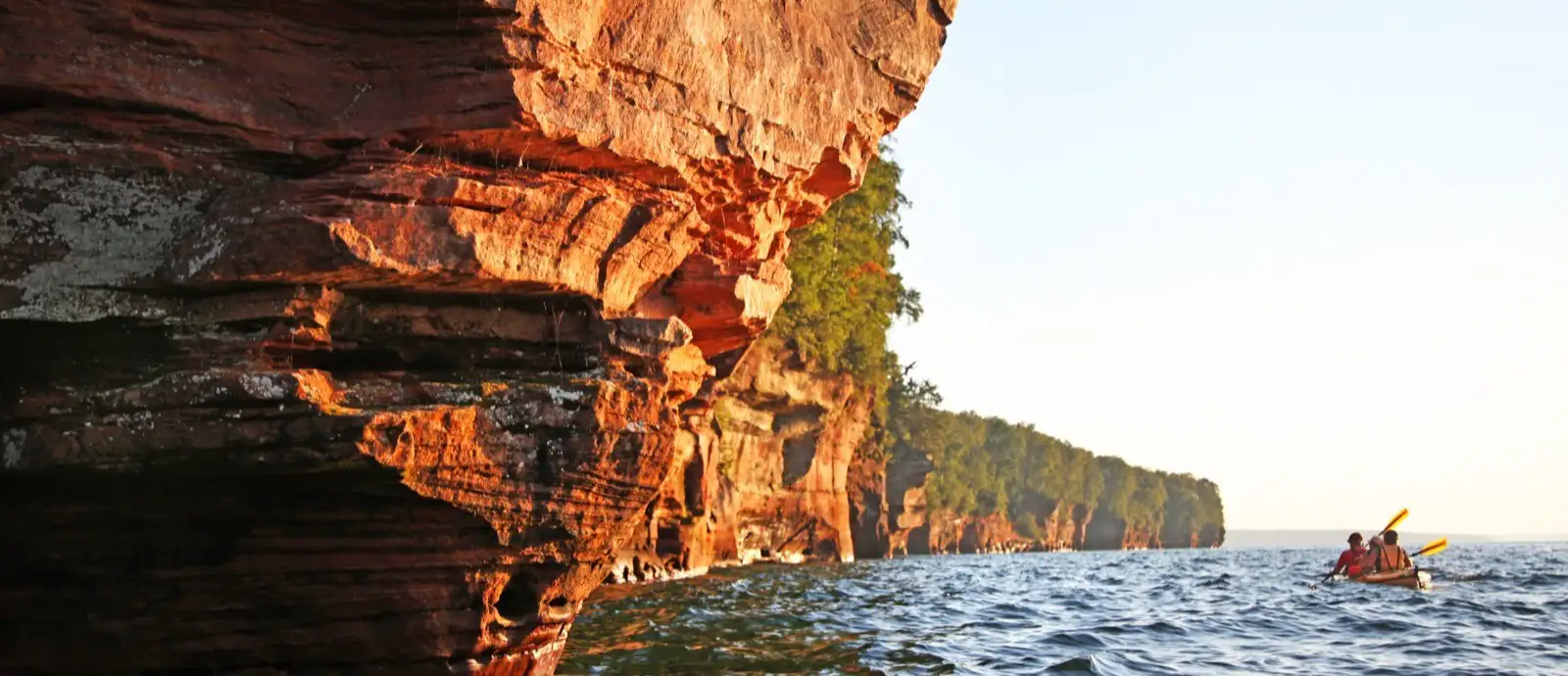
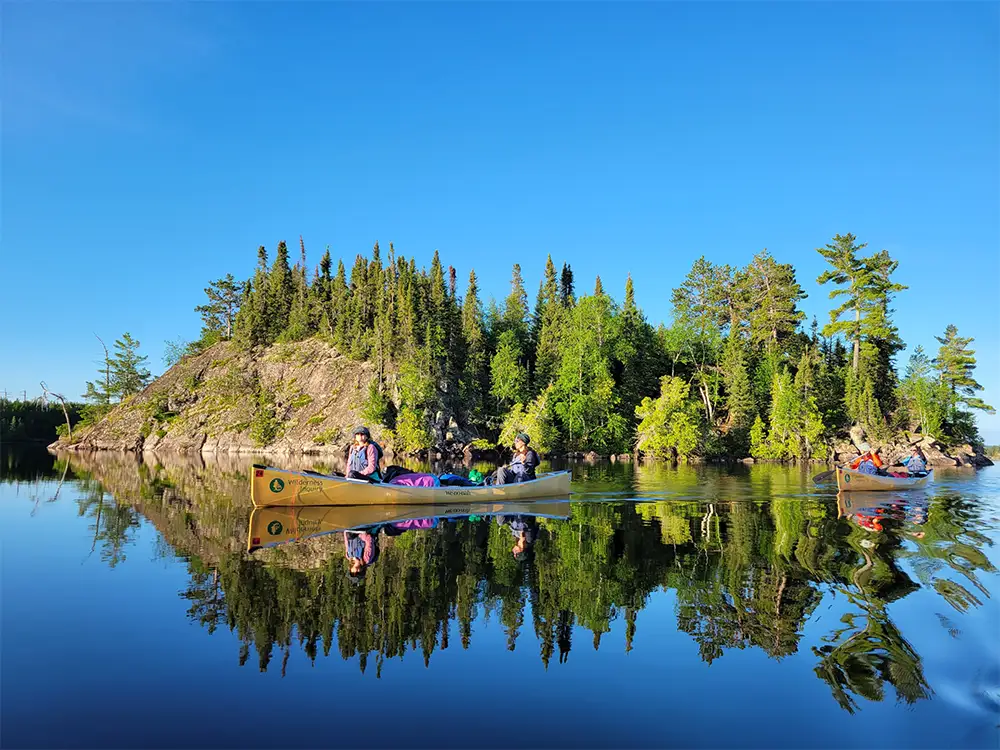
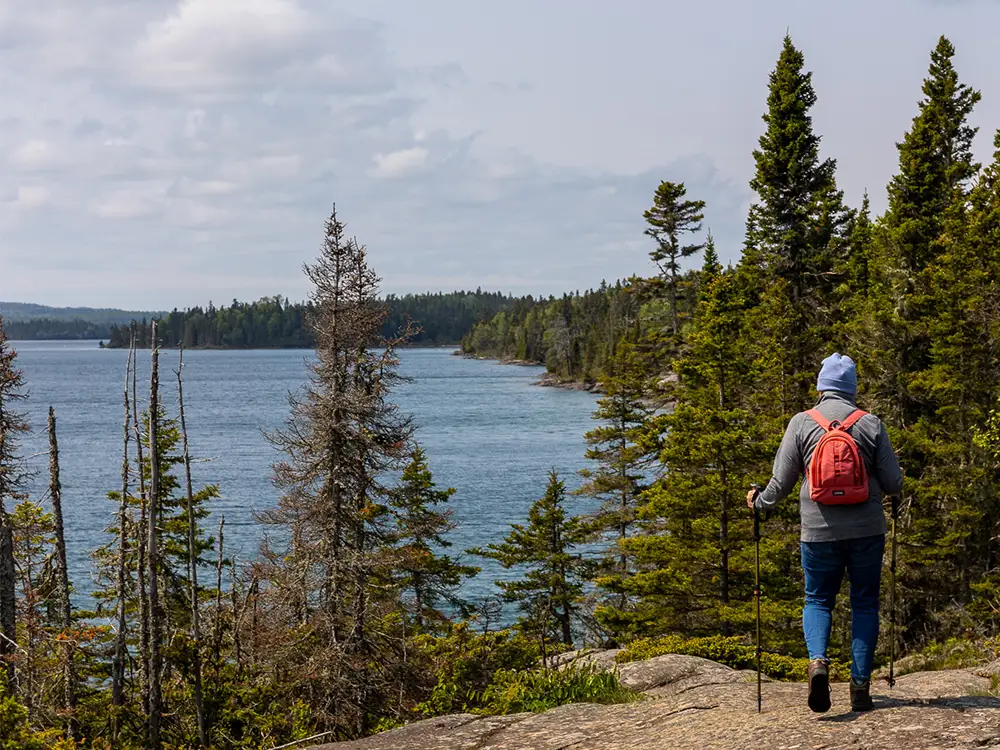
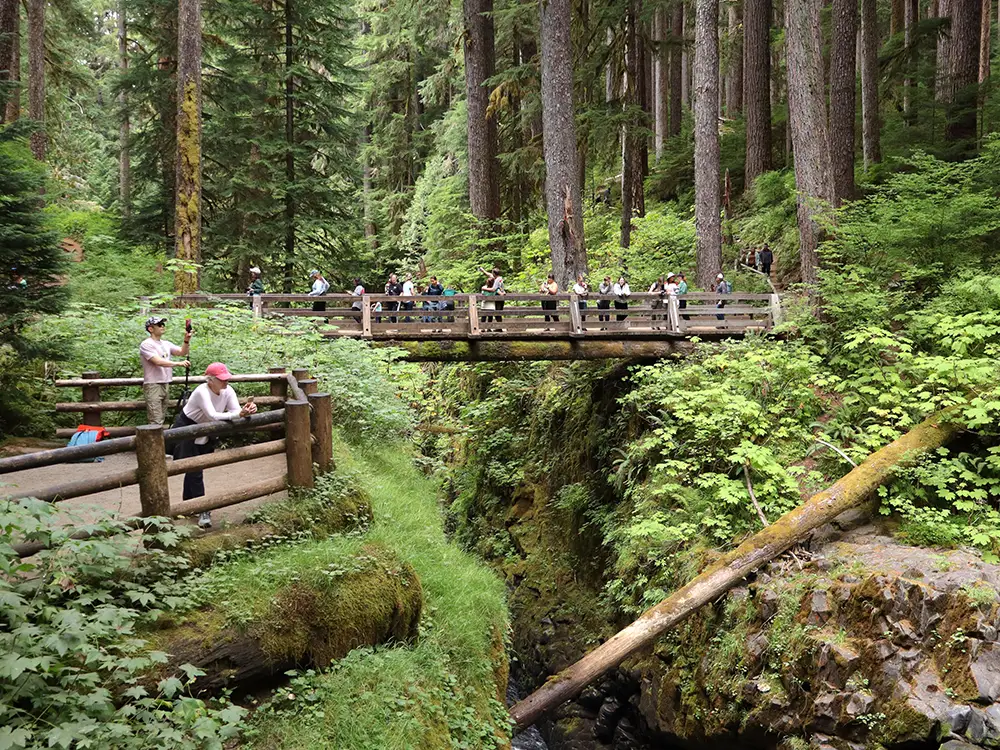
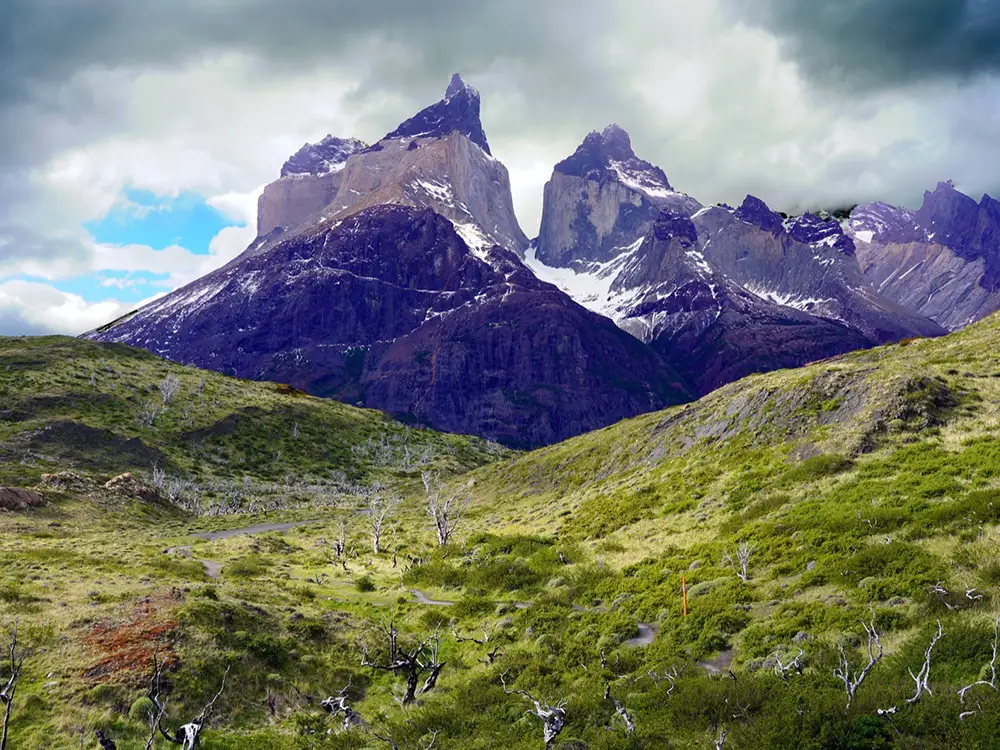
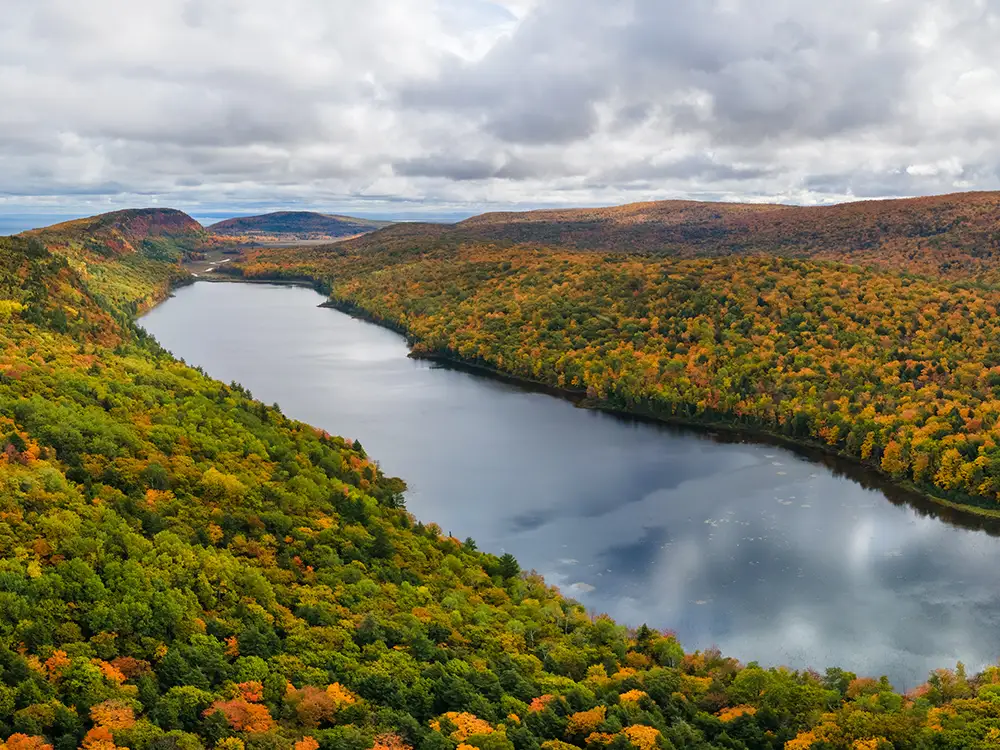
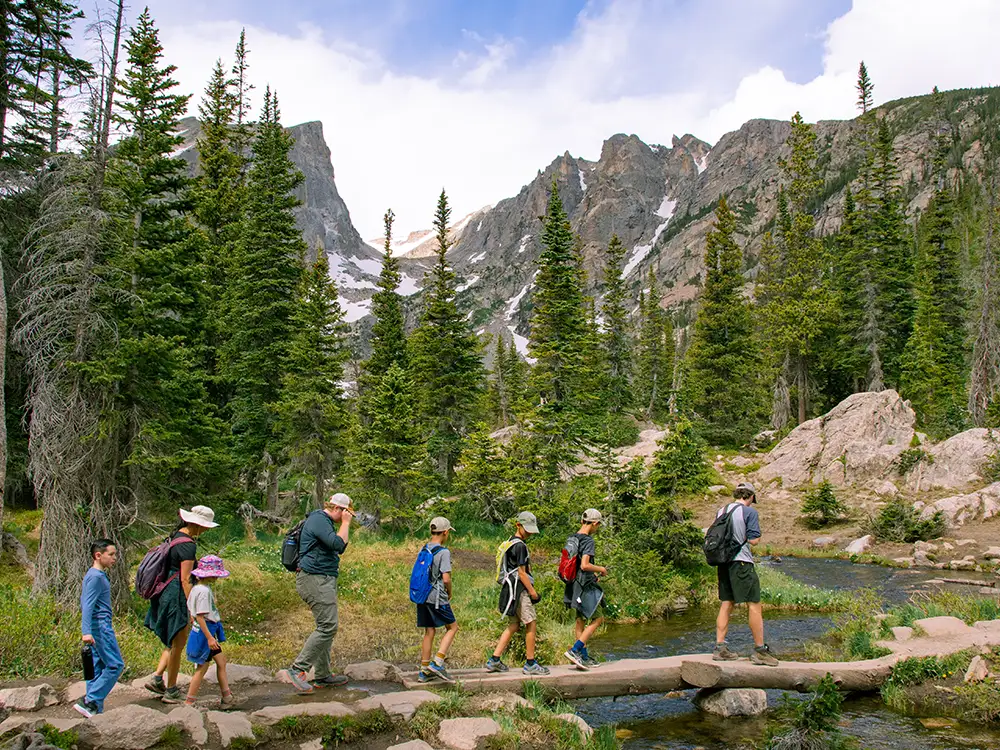
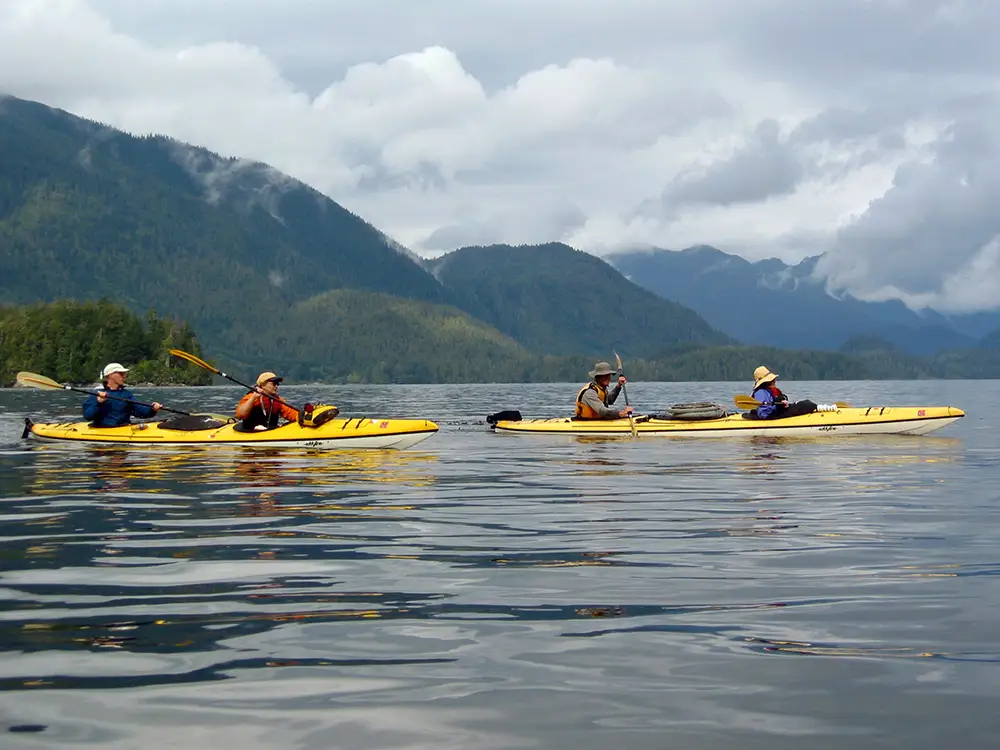
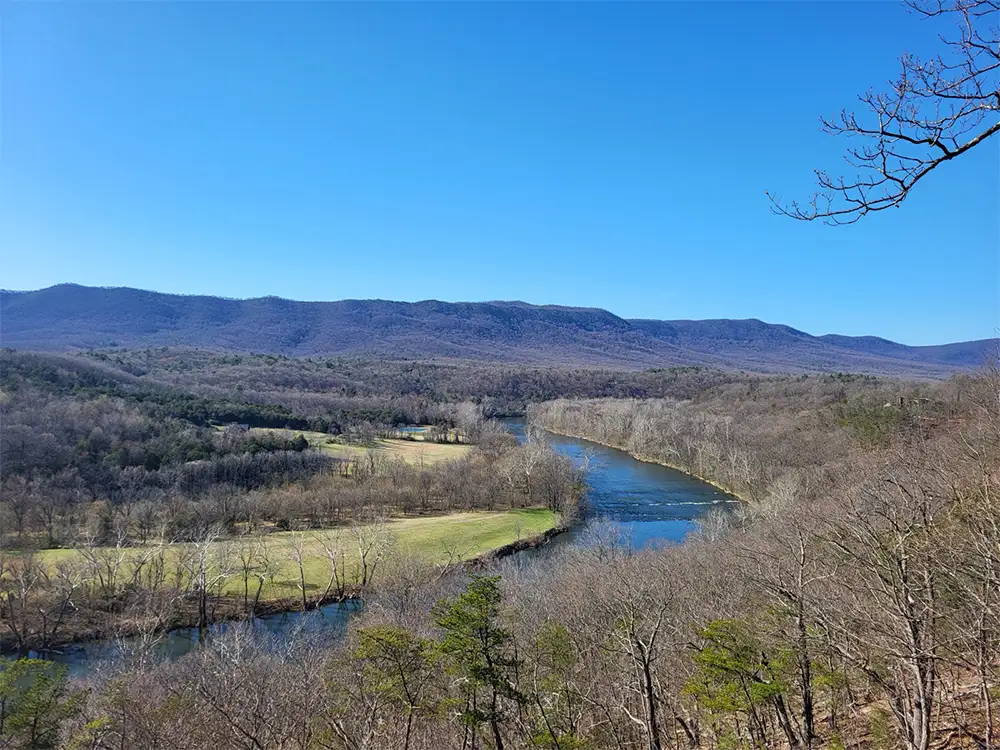
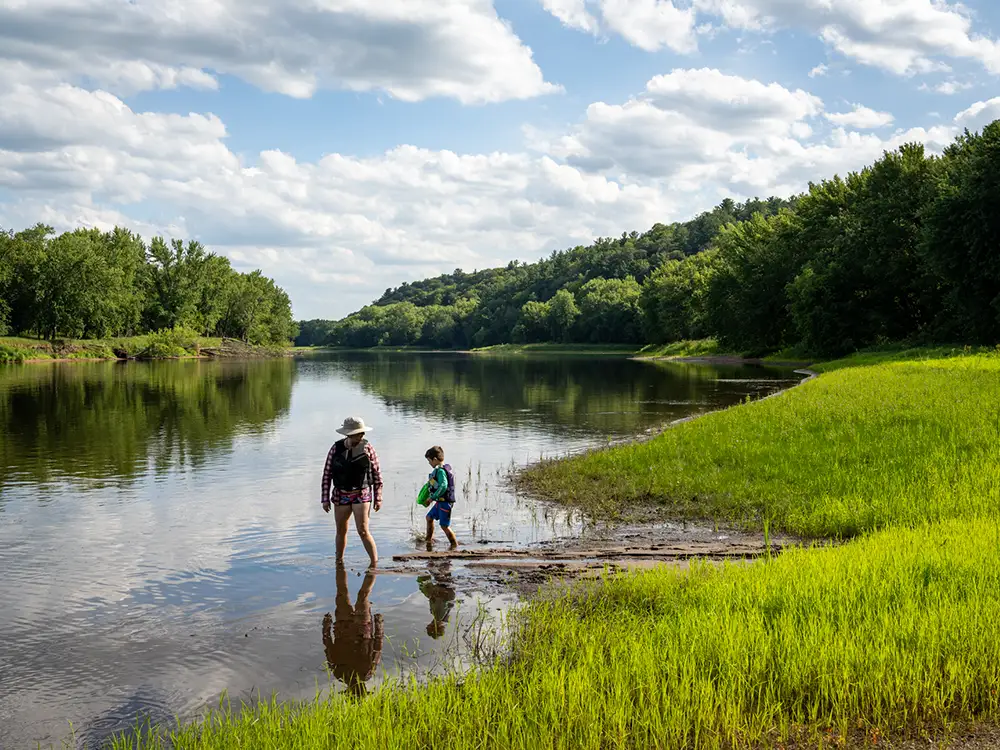
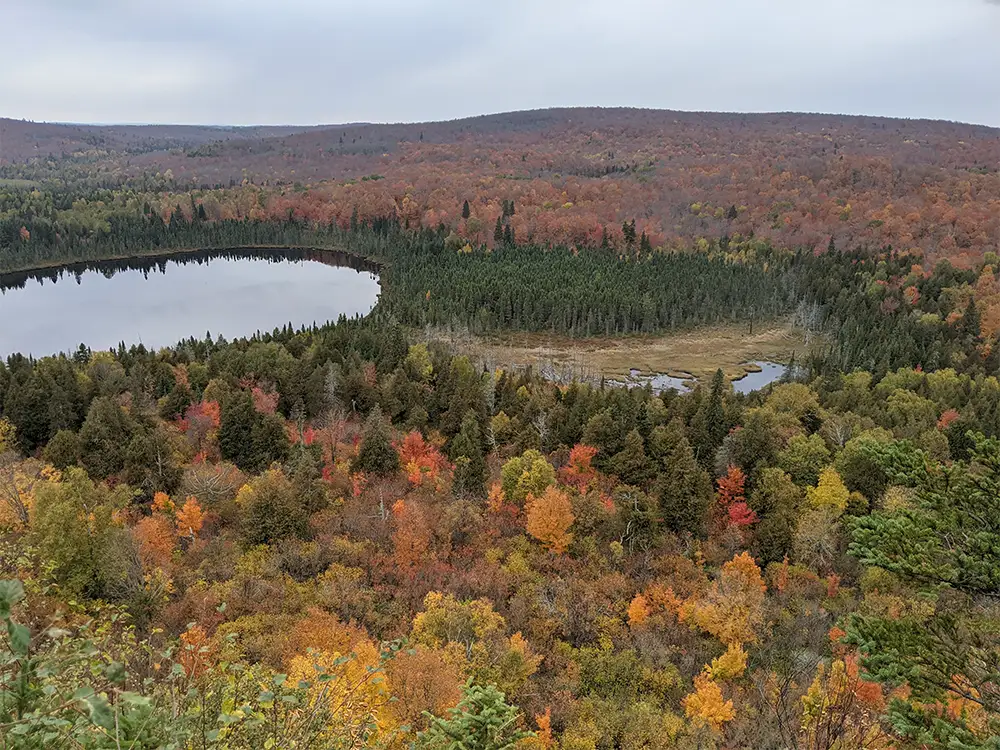
Backpack the Superior Hiking trail along the North Shore of Lake Superior and enjoy waterfalls, rapids, and gorges as it winds through Minnesota Northwoods. You will move from site to site, making camp along the way. Take in nature's entire spectrum of beauty from panoramic overlooks of the lake to the smallest lichens that blanket the rugged rocks. Come experience the land that has been shared through story and song for thousands of years.
Sample Itinerary
Please note: While the itinerary presented is an accurate depiction of what your trip will be like, it is only an example. Our trips are real adventures in the outdoors--not pre-packaged tours that happen on a schedule.
DAY 1: Drive up the North Shore of Lake Superior to Finland Recreation Center where our trip officially begins. Backpack for 2 hours then settle into the campsite and get acquainted with our group over dinner and a campfire. Spend the first night listening to the waves of Egge lake.
DAY 2: Arise for an early breakfast, pack up, and follow the trail past the Old Trappers cabin, Sonju Lake to the Baptism River. This is about 3 hours of backpacking.
DAY 3: Follow the trail to Crosby-Manitou State Park. SHT crosses the road and follows the entrance road into the park. There is a water spigot with fresh water near the self-registration sign.
DAY 4: Hike from campsite within park to West Caribou River. There will be spurs along the way to great overlooks that could be good spots for lunch. This is the most difficult section. Be prepared for steep climbs and descents. Make sure to fill water up at the Caribou River Bridge on your way out of Crosby-Manitou State Park.
DAY 5: Trailhead: Caribou River Wayside – After one last breakfast, backpack about an hour to the West Caribou River Wayside. Bid farewell to the Superior shoreline and newfound friends. Pack up belongings and hit the road after lunch.
Travel, Terrain, Etc...
TERRAIN/ROUTE CHOICES: Minnesota's North Shore of Lake Superior is a land of rugged, forested hills, impressive vistas of the mighty Lake, rocky shores, crashing waves, cozy valleys and breath taking waterfalls. All of the day hikes are planned with moderate ascents and descents along easily accessible trails. Weather may play a role in determining the exact route, but the Trail offers many alternatives to avoid too much exposure.
TYPE OF TRAVEL/DISTANCE: Your group will hike to destinations along the Superior Hiking Trail. An average days hiking will include routes that consist of 2-8 miles or 3-6 hours of hiking, depending on weather conditions.
WEATHER: Temperatures in the summer and fall months can range from 40 F to 95 F. Rainfall can vary, but you should expect at least a day or two of rain. Lake Superior's presence can bring about sudden weather changes.
LODGING/BATHROOM FACILITIES: This is a camping trip. At night you will sleep in a comfortable, lightweight backpack tents. We recommend that you bring your own personal sleeping bag and "camprest" foam core inflatable mattress (a limited number of sleeping bags and mattresses are available as loaners for individuals who need them). Bathroom facilities consist of an outhouse. We make every effort to ensure privacy and cleanliness.
GROUP SIZE: The group size ranges from 10 to 12 participants, plus 2 or more Wilderness Inquiry staff. Each group consists of people of various ages, backgrounds and abilities, including people with disabilities.
CAMP CHORES: Our trips are cooperative in nature. WI staff will assist you in whatever areas you need, however most people pitch in where they can. Part of the adventure involves learning about daily camp activities.
EQUIPMENT AND CLOTHING: If you are new to outdoor activities, you need not spend a lot of money on gear. Wilderness Inquiry will provide all necessary canoeing and camping equipment. All you need to provide is your personal gear, such as clothing and a sleeping bag. We provide backpacks. A detailed equipment list will be sent to you upon confirmation of your participation. If you need to borrow personal gear, that can usually be arranged.
LEVEL OF DIFFICULTY: No previous experience is needed to complete this trip.
 |
Wilderness Inquiry is proud to serve Caribou Coffee on all our trips. Great food, great coffee, and great company are just some of the ingredients that make Wilderness Inquiry trips special.
|
[ Dates & Fees ]

Guide to the Superior Hiking Trail - Superior Hiking Trail Association
The Superior Hiking Trail is 205 miles long. The Trail currently begins just north of Two Harbors, MN and ends just before the Canadian border. The first documented through-hiker of the Trail was Paul Hilna in 1995. Paul raised pledges for the SHTA and Wilderness Inquiry as he hiked the length of the trail with crutches due to his paralyzed lower extremities.
The first people to enter the North Shore region arrived around 10,000 years ago. These Native Americans, called Paleo-Indians, entered the region during the final retreat of the Wisconsin Glaciation. As the Superior ice lobe melted back to the northeast, it blocked the present outlet of Lake Superior, causing lake levels to rise above their present levels by up to 450 feet.
The Old Copper Culture followed the Paleo-Indian cultural tradition around Lake Superior and existed from about 5000 years ago until about 2000 years ago. During this time the Indians used raw native copper, found on Isle Royale and in northern Michigan, hammering it into tools. Occasionally copper artifacts, in the form of spear points, knives, and fish hooks, are found along the North Shore.
Many waves of Indian people inhabited the North Shore prior to the European contact. The first Europeans, French explorers and fur traders, first reached the Lake Superior country about 1620. At that time, the Ojibwa inhabited the eastern end of the lake as far west as the Upper Peninsula of Michigan. By 1650 the French had encountered the Dakota, or Sioux, at the head of the lake. Along the North Shore lived the Assiniboine, and the Cree, who moved farther to the west and north.
By 1780, the Europeans had established fur trading posts at the mouth of the St. Louis River and at Grand Portage. The Ojibwa were firmly established on the western end of the lake and in northeastern Minnesota. In 1854, the Ojibwa signed the Treaty of La Pointe, which opened up northeastern Minnesota to mineral exploration and settlement. The first permanent settlement was a group of Germans from Ohio who settled at Beaver Bay in 1856. The late 1800s saw a rise of commercial herring fishing along the North Shore, and it was said that nearly every cove harbored at least one fisherman's shanty.
Across Lake Superior, Michigan lumber barons had cut most of the big stands of virgin white pine in Michigan by 1890. They then set their sights on Lake Superior's North Shore. Between 1890 and 1910, millions of board feet of red and white pine were cut from the hills along the North Shore.
Ever since northeastern Minnesota was opened to exploration, mining has had an active history on the North Shore. Small, unproductive copper explorations began along some of the rivers in the 1850s and 1860s. In 1884, high grade iron ore from the Iron Range in northeastern Minnesota started shipping from the huge ore docks in Two Harbors on ore boats bound for the mills on the lower lake.
Taconite, a material refined from low-grade iron ore, was produced in the 1950s from mines on the Minnesota Iron Range. Taconite pellets continue to be processed and shipped to refineries on the lower Great Lakes from Duluth, Two Harbors, Silver Bay and Taconite Harbor.
Geology of North Shore Waterfalls
Many beautiful waterfalls bless the North Shore, including several that give the name to the Cascade River. The abundance of waterfalls is basically the result of two factors:
1) The profound erosion of the Lake Superior basin by the great Ice Age glaciers, which led to the steep slope of the North Shore; and 2) the occurrence of hard igneous rocks underlying the coastal zone. The fast-running rivers have eroded the softer bedrock to form the deeper parts of the gorges. However, the bedrock has some harder parts, such as dikes or the lower parts of lava flows, and these resist erosion, leading to falls and cascades. Many of the falls on the Cascade River represent individual basalt lava flows.
Animals of the Superior Hiking Trail
There are three main habitats to the Trail. The Northern Hardwoods group, the Boreal Forest group, and the Border group. Members from each of these forest groups exist side by side in a wide variety of plant communities. When hiking along the trail, you may encounter animals of three basic types:
1) Small animals, which are common but seldom seen, including shrews, voles, mice and weasels.
2) Medium-sized animals which are somewhat common and often seen, including white-tail deer, moose, black bear, snowshoe hare, red squirrel, beaver.
3) Medium to large, generally carnivorous animals which are rare, wide-ranging and also seldom seen, including timber wolf, coyote, lynx and bobcat.
On a typical day hike you probably won't see a lot of animals besides birds and insects. However, white tail deer, the snowshoe hare, and the red squirrel, among others are commonly seen. In the muddy sections of the trail, you may want to look for tracks of deer, moose, and wolves - animals likely to use the tails as an easy path through remote woods.
For more information, visit these links:
Superior Hiking Trail Association
Gooseberry Falls State Park
Split Rock Lighthouse
[ Dates & Fees ]
WI leads trips to this destination but currently has no dates scheduled. If you have a group of people interested, we can set up a customized adventure just for you! Please contact us if you are interested in a group trip to this destination.
info@wildernessinquiry.org
612-676-9400
800-728-0719
(Join our waiting list to be notified when WI schedules a trip to Superior Hiking Trail Backpack)