|
|
|
|
Prince William Sound Kayak
Paddle among the Giants--Whales, Glaciers, and the Sound!
Click any thumbnail for larger image:

Sea Otters and seals on the ice in Prince William Sound.
photo by: Lais, G
|

Blue ice on the Chenega glacier. The blue is a reflection of the sky.
photo by: Lais, G
|

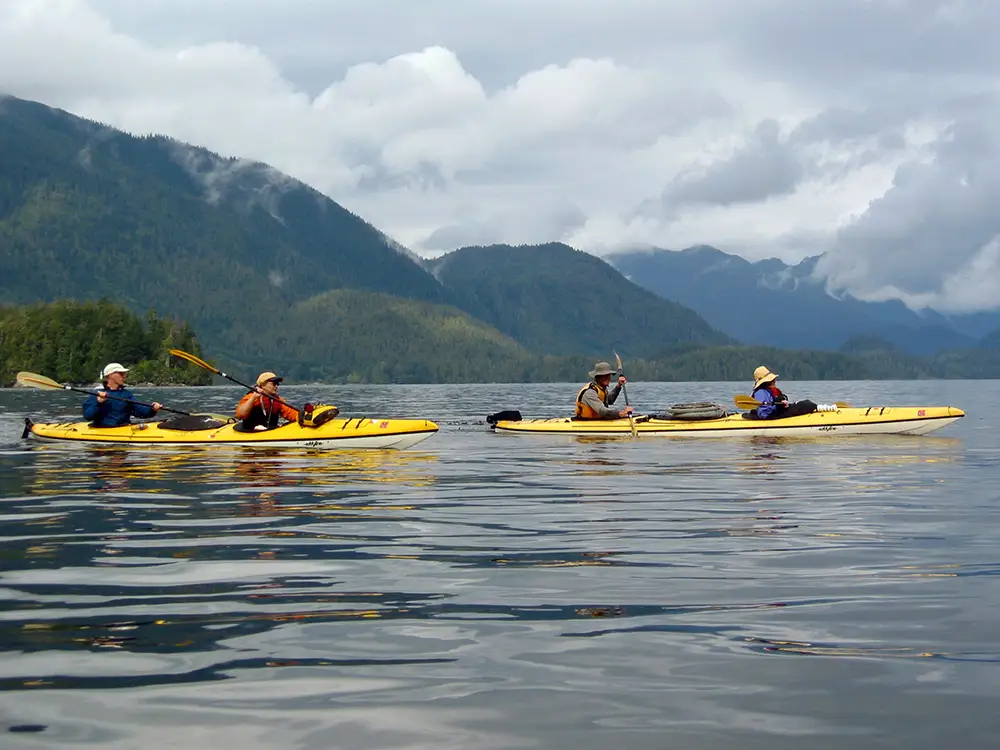
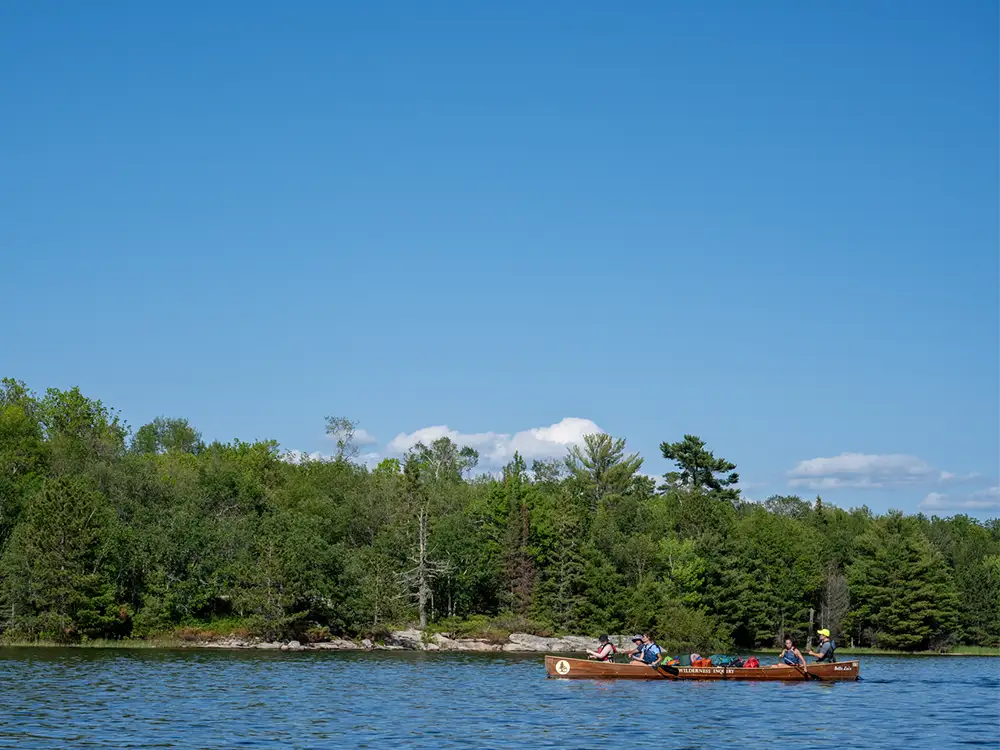
Martin, Diana and Joe in a triple sea kayak on Prince William Sound.
photo by: Lais, G
|

Coming into a landing near Chenega Island on Prince William Sound.
photo by: Lais, G
|

Camping near a "Tombolo," which is a spit of sand that connects one island to another during low tide.
photo by: Lais, G
|

Morning coffee in Prince William Sound.
photo by: Lais, G
|

Sea kayaking Prince William Sound.
photo by: Lais, G
|

Dave sea kayaks on Prince William Sound.
photo by: Lais, G
|

Martin and Patti sea kayak on Prince William Sound.
photo by: Lais, G
|

Lunch at Dual Head, a popular camp spot in the southern section of Prince William Sound.
photo by: Lais, G
|

Fresh glacier water! Patti is refreshed as she fills her bottle.
photo by: Lais, G
|

Dave with a chunck of ice from Alaska's Prince William Sound.
photo by: Lais, G
|

Dave Sanders, Wilderness Ranger.
photo by: Lais, G
|

Making the crossing from Dual Head to Icy Bay and Gaamak Cove. This is one of the most beautiful places in Prince William Sound.
photo by: Lais, G
|

Crossing the Sound.
photo by: Lais, G
|
Page 1 of 2 | Next | Last
[ Dates & Fees ]
|
|
Prince William Sound Kayak
Paddle among the Giants--Whales, Glaciers, and the Sound!
Encompassing more than 15,000 square miles of rugged, coastal wilderness, Prince William Sound is a sea kayakers paradise. It holds more than 20 tidewater glaciers, countless islands, passages, and sheer-walled fjords draped with tumbling waterfalls. To the North, East and West, the sound is cradled by the Chugach Mountains, rising abruptly out of the ancient coastal rainforest. These snow clad peaks have helped shelter the sound from outside influence and protected a rich diversity of life. Bears, eagles, sea lions, seals, killer whales, porpoise and countless birds feast on the annual bounty of the most productive salmon runs in the world. Humpback whales gorge all summer on plankton in preparation for the winter journey to their Hawaiian breeding grounds.
Sample Itinerary
Please note: While the itinerary presented is an accurate depiction of what your trip will be like, it is only an example. Our trips are real adventures in the outdoors--not pre-packaged tours that happen on a schedule.
DAY 1: Meet group at a hotel in Anchorage. Enjoy dinner, review gear and itinerary, and get acquainted.
DAY 2: Meet for an early breakfast and leave for Boggs-Begich visitor center in Girdwood. Pass through the tunnel to Whittier and arrive at our ferry/shuttle service. Load your gear on to the ferry and depart for our first campsite on Pt. Nowell. Set up camp, learn systems, and share trip expectations in the evening.
DAY 3: Conduct a kayak safety and paddling orientation in the small bay near Pt. Nowell. Paddle south to Paddy Bay and enjoy the vista from Paddy Point. Fish for salmon, whale watch, and settle into the routine of this amazing area.
DAY 4: Enjoy good coffee with breakfast before paddling past Ewan Point to Jackpot Bay. Camp across from the abandoned native village of Chenega.
DAY 5: Paddle up Icy Bay to a spectacular campsite at Gaamak Bay. We'll leave early in the day and hug the western shore in order to minimize the impact of the “katabatic wind.” This cool wind blows down the massive Sargent Icefield and covers peaks as far as a few miles inland with ice and snow. In this passage, we’ll see small icebergs floating along after falling from the face of the Chenega Glacier inside Nassau Fjord.
DAY 6: After more good coffee and blueberry pancakes, we’ll paddle in to Nassau Fjord. Even at a safe distance, you'll feel the overwhelming presence of Chenega tidewater glacier. Two miles long, this glacier rumbles, rocks and rolls with activity. Even the most seasoned sea-kayaker will be struck by the rarity of a paddle of this nature--ice, seals, sea otters, mountain peaks, salmon streams, black gravel beaches, and sea caves all in one place! Have lunch on the beach and take loads of pictures. Ice permitting, you may even decide to paddle across the Fjord to Tiger Tail, a “small” spur glacier that forks off the more massive Tiger glacier. This is a day you will never forget!
DAY 7: Enjoy a leisurely morning in the stunning scenery of Gaamak Bay. Take group photos with beached blue icebergs as a backdrop. After packing up all your gear, board a charter boat and return to Whittier. Drive back to Anchorage, enjoy dinner as a group, and say your “good-byes” to one another. Get ready to depart in the morning.
Travel, Terrain, Etc...
TERRAIN/ROUTE CHOICES: Prince William Sound is located at the northern edge of the Pacific rain forest—an area lush and green with vegetation. You will paddle through protected fiords and passages, exploring the bays, inlets and streams. Most campsites are packed gravel beaches.
TYPE OF TRAVEL/DISTANCE: You will travel in sea kayaks that hold 1-3 people plus all necessary gear. An average day's travel will consist of 3-5 hours of paddling, depending on weather conditions. Be prepared for the possibility of a wind bound day. Travel distances vary from 8-10 miles per day with the exception of scheduled layover days. To protect the environment, WI uses Leave No Trace camping techniques.
WEATHER: Temperatures in the summer months range from 45 F to 75 F. The climate is moderated by the Pacific Ocean. Rainfall can vary, but you should expect at least a day or two of rain. This is, after all, a rain forest!
LODGING/BATHROOM FACILITIES: At night you will sleep in a comfortable Eureka Timberline tent. Typically, there are 3 people per 4-person tent (although other arrangements can be made). We recommend that you bring your own personal sleeping bag and "camprest" foam core inflatable mattress (a limited number of sleeping bags and mattresses are available as loaners for individuals who need them). We make every effort to ensure privacy and cleanliness.
GROUP SIZE: The group size ranges from 10 to 12 participants, plus 2 or more Wilderness Inquiry staff. Wilderness Inquiry enjoys a great partnership with the Forest Service, and in the past they have sent Wilderness Rangers to accompany us. Each group consists of people of various ages, backgrounds and abilities, including people with disabilities.
CAMP CHORES: Our trips are cooperative in nature. WI staff will assist you in whatever areas you need, however, most people pitch in where they can. Part of the adventure involves learning about daily camp activities.
EQUIPMENT AND CLOTHING: If you are new to outdoor activities, you need not spend a lot of money on gear. Wilderness Inquiry will provide all necessary kayaking and camping equipment. All you need to provide is your personal gear, such as clothing and a sleeping bag. A detailed equipment list will be sent to you upon confirmation of your participation. If you need to borrow personal gear, that can usually be arranged.
LEVEL OF DIFFICULTY: Previous wilderness experience and/or paddling experience is recommended. Though not technically difficult, this trip can be physically challenging. This trip is well suited for people with mobility impairments.
 |
Wilderness Inquiry is proud to serve Caribou Coffee on all our trips. Great food, great coffee, and great company are just some of the ingredients that make Wilderness Inquiry trips special.
|
[ Dates & Fees ]

Prince William Sound is a vast expanse of islands, fiords and bays nestled off the coast of Alaska, South East of Anchorage. On a sailing expedition in 1778, George Vancouver named the area after the future king of England, William IV. This explains why many of the landmarks bear either British or Native names. Bligh Island, for example, was named after Lt. William Bligh before his fateful journey on the HMS Bounty.
Named after the native Alaskan Chugach culture, the Chugach Mountains and national forest surround Prince William Sound to the West, North and East. Chenega Island, off the coast, once boasted the Chugach village of Chenega. For over 400 years the village thrived, until the 1964 Good Friday Earthquake hit, killing over one third of the villagers. The remaining Chugach people relocated to Chenega Bay on Evans Island where they were later devastated by the 1989 Exxon Valdez oil spill. To this day, villagers continue to inhabit Evans Island.
To the South of Prince William Sound, Montague and Hinchinbrook Islands buffer the wild temper of the Gulf of Alaska. These protected waters harbor the most diverse habitat of the entire northern Pacific Coast. Over two hundred species of birds inhabit the sky and coastline, while deer, mountain goats and bear roam the land. Take to the sea and you’ll find Humpback and killer whales, sea lions and seals, not to mention, some of the most productive Salmon runs in the world.
The links below provide more great information about Prince William Sound. Click on them to learn more. Then come back to register for a great trip!
For more information, visit these links: Read about Prince William Sound in Wikipedia Read about the Chugach National Forest in Wikipedia Official site of USDA Forest Service on the Chugach National Forest Learn more about Alaska from the Alaska Natural History Association
[ Dates & Fees ]
| 2011 Dates |
|
Fee |
|
 |
|
06/17/2011 - 06/23/2011
|
|
$1895 |
Register Now |
 |
|
06/26/2011 - 07/02/2011
|
|
$1895 |
Register Now |
Transportation
Getting to this destination is easy! Just take a plane to Anchorage and meet us at the hotel we specify in your confirmation packet. WI takes care of getting from Anchorage through the Whittier tunnel to Whittier, Alaska, where we meet the shuttle boat that takes up out on to the Sound. |
| Meeting Places: |
Additional Round-trip Fee: |
| Anchorage |
$0 (No charge)
|
|

printer friendly |
|
- 7 days, 6 nights
- 2 Professional Staff
- Van shuttle from Anchorage
- Boat shuttle from Whittier, Alaska
- All meals and snacks included
- Tents & group camping & cooking gear
- Wetsuit and PFD's included
- Tandem, single and triple Kayaks
- Adaptive gear as needed
- Wilderness Inquiry operates under special use permits with the USDA Forest Service.
|
|
|
|
|
|