home   register   about us   programs   get involved   support wi   news   contact us 
General Trip Info

Montana's Missouri River Canoe

Paddle and Hike the Lewis & Clark Trail

Click any thumbnail for larger image:


The white cliffs of the Upper Missouri River on the Lewis and Clark trail. This is a fabulous canoe and hiking trip in a beautiful and remote wilderness.
photo by: Barnes, J

White cliffs on the Upper Missouri River.
photo by: Barnes, J

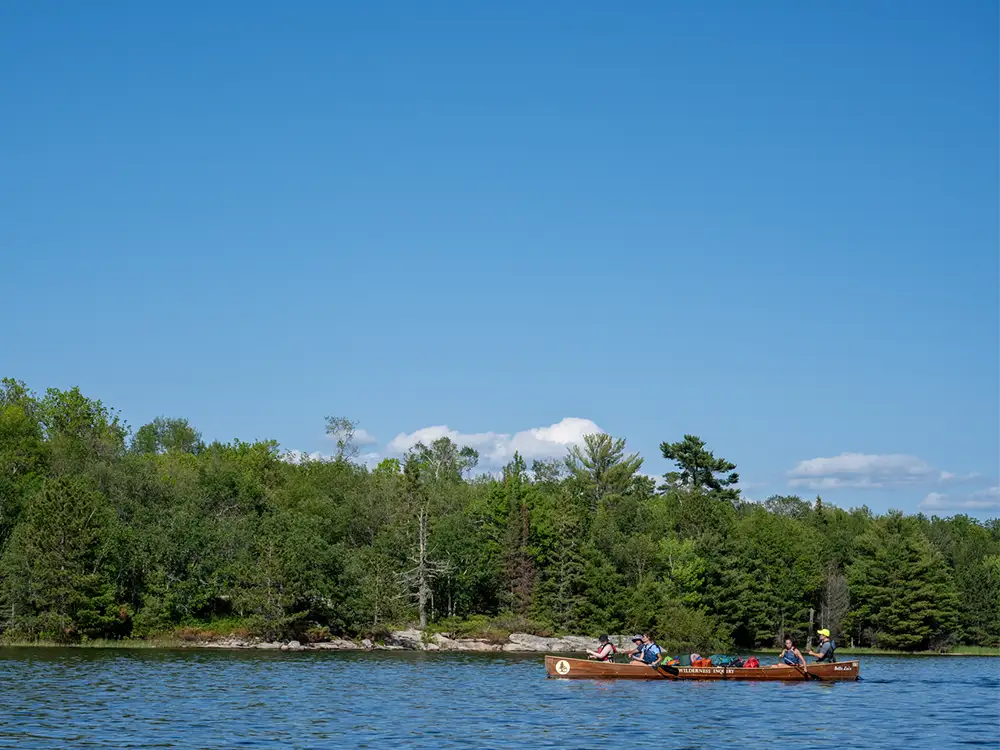
Modern day travelers on the Missouri River. We wonder what Lewis and Clark would have said had they encountered these folks.
photo by: Anderson, J

Sharing a campfire at the same spot where Lewis and Clark and the Corps of Discovery camped.
photo by: Tsong, R

Morning canoe paddle in front of the white cliffs.
photo by: Tsong, R

Group on the backside of Hole in the Wall. There is a lot of great hiking on this trip!
photo by: Lais, G

Hiking up to the Hole in the Wall. This is a great hiking trip.
photo by: Hronek, B

Citadel Rock--one of the landmarks of the Lewis and Clark Expedition.
photo by: Lais, G

Spires like these were compared to the cathedrals of Europe by early explorers.
photo by: Nacheman, E

White Cliffs of the Missouri River in Montana.
photo by: Nacheman, E

Canoeing the Missouri River.
photo by: unknown

Bottle heads on the Missouri River in Montana.
photo by: Baustian, C

Hundreds of birds nest in the nooks and crannies of the White Cliffs.
photo by: Guthrie, Randy

Another view of the Hole in the Wall.
photo by: Pavlovic, J

Uncanny resemblance!
photo by: Koenigs, C

Page 1 of 4 | Next | Last


[ Dates & Fees ]

Montana's Missouri River Canoe

Paddle and Hike the Lewis & Clark Trail

Morning canoe paddle in front of the white cliffs.

Looking for a taste of early 19th century exploration? Experience Montana's 'Big Sky' country, paddling the Missouri River much as Lewis and Clark did 200 years ago. Start at Coal Banks Landing and float on swift currents beneath beautiful sandstone cliffs and white stone spires that the explorers compared to Europe's finest cathedrals. Paddle among the Eye of the Needle, LaBarge Rock, Citadel Rock and Hole in the Wall, spectacular land forms that grace this section of the river. Set up camp under cottonwood trees at Slaughter River, a Lewis and Clark site, and read from their journals. Look for mule deer and elk roaming the area and browsing on vegetation. Catch glimpses of bald and golden eagles, prairie falcons and sparrow-hawks perched on cliffs or soaring overhead. Hear prairie dogs chirp and whistle from their extensive "towns" nearby (did you know that early settlers called them whistle pigs?). Explore abandoned homesteads within easy hiking distance of the campsite. End the adventure at Judith Landing, a historic area for the Blackfoot tribe, fur traders, and steam boaters.

Sample Itinerary

Please note: While the itinerary presented is an accurate depiction of what your trip will be like, it is only an example. Our trips are real adventures in the outdoors--not pre-packaged tours that happen on a schedule.

DAY 1: Meet your group in Billings and travel to Coal Banks stopping to explore Fort Benton along the way. Get to know each other and prepare for a wonderful trip. Stay at Coal Banks Landing.

DAY 2: After breakfast at Coal Banks, pack up camp, practice canoeing skills, then start down river. Camp in the rich bottom lands along the river near the Eye of the Needle.

DAY 3: Enjoy the same white cliffs and scenic beauty that Lewis and Clark described as "scenes of visionary enchantment" when they first came through in 1805. Pass Citadel Rock and camp near the Hole in the Wall formation.

DAY 4: Spend most of the day paddling along the banks of the river. Camp at Slaughter River, where Lewis and Clark camped in 1805 on their way west and in 1806 on their return trip. Set up camp and read from Lewis and Clark's log.

DAY 5: Sleep in and enjoy a layover day at Slaughter River. Explore the geology of the river valley or search for wildlife. Take a dip in the river to cool off in the afternoon.

DAY 6: Look for big horn sheep along the bluffs as we paddle downstream toward Judith Landing, a historic area for the Blackout tribe, fur traders, and steamboats. Conclude the trip at Judith Landing after lunch. Those using WI's van transport can expect to return to Billings late that evening.


Travel, Terrain, Etc...

TERRAIN/ROUTE CHOICES: The Missouri River flows through high prairie hills, covered by short grasses, sage brush, and cottonwood trees along the river bank. Generally speaking, the terrain is accessible, with sandy, level campsites and no portages. There are many steep cliffs where the river has cut channels and gullies in the soil and sandstone. The Missouri River offers a range of daily route options from very easy to moderate.

TYPE OF TRAVEL/DISTANCE: You will travel in 17-foot Old Town Tripper canoes, which hold two to three paddlers, plus all necessary gear. An average day's travel consists of 2-5 hours of paddling depending on the wind and weather. Travel distances run 10 to 14 miles per day with the exception of scheduled layover days. To protect the environment, WI uses Leave No Trace camping techniques.

WEATHER: Temperatures in the summer months range from 40 F in the evening to 100 F during the day. Rainfall can vary, and you should expect at least a day or two of rain. Strong head winds can also be a factor on this trip.

LODGING/BATHROOM FACILITIES: This is a camping trip. At night you will sleep in a comfortable Eureka Timberline tent. Typically, there are 3 people per 4 person tent (although other arrangements can be made). We recommend that you bring your own personal sleeping bag and "camprest" foam core inflatable mattress (a limited number of sleeping bags and mattresses are available as loaners for individuals who need them). Bathroom facilities consist of an outhouse or a foldable commode chair set up in a privacy tent. We make every effort to ensure privacy and cleanliness.

GROUP SIZE: The group size ranges from 10 to 14 participants, plus 2 or more Wilderness Inquiry staff. Each group consists of people of various ages, backgrounds and abilities, including people with disabilities.

CAMP CHORES: Our trips are cooperative in nature. WI staff will assist you in whatever areas you need, however most people pitch in where they can. Part of the adventure involves learning about daily camp activities.

EQUIPMENT AND CLOTHING: If you are new to outdoor activities, you need not spend a lot of money on gear. Wilderness Inquiry will provide all necessary canoeing and camping equipment. All you need to provide is your personal gear, such as clothing and a sleeping bag. A detailed equipment list will be sent to you upon confirmation of your participation. If you need to borrow personal gear, that can usually be arranged.

LEVEL OF DIFFICULTY: No previous experience is needed to complete this trip.

Wilderness Inquiry is proud to serve Caribou Coffee on all our trips. Great food, great coffee, and great company are just some of the ingredients that make Wilderness Inquiry trips special.

[ Dates & Fees ]      


In the Missouri Breaks of central Montana, it's possible to view a landscape that has been unchanged for centuries. These rugged badlands, scenic White Cliffs and high rolling prairies attracted Native Americans, Lewis and Clark and a few hearty settlers, all of whom turned out to be mere visitors. The region has been described in many ways: "scenes of visionary enchantment" by Lewis and Clark, Karl Bodmer describes a formation as "it was like an old Gothic Chapel with a chimney and pines...growing around the wall;" and William Clark also wrote of the country as being harsh and desolate. Stephen Ambrose's Undaunted Courage and Ken Burns' documentary has also generated interest and has attracted people from throughout the World. The following is a brief overview of what can be learned while paddling the Upper Missouri National Wild and Scenic River.

With a vision of the United States spreading from ocean to ocean, President Thomas Jefferson conceived of an expedition to explore the vast expanse of the Louisiana Territory and the Pacific Northwest. The expeditions primary objectives were to find a transportation route through the Louisiana Territory to the Columbia River and in doing so the explorers were to learn about native cultures and the resources of the region. Jefferson's personal secretary and friend, Meriwether Lewis, was chosen to head the expedition. With the acquisition of the Louisiana Territory, Meriwether Lewis and William Clark embarked upon an epic adventure of discovery which stands the test of time and will continue to amaze and inspire people for generations.

The picturesque White Cliffs and numerous ingenious intrusions have been slowly exposed by the meandering Missouri River. Since carving its way through millions of years of rock, the Missouri has helped geologists unravel the geologic mysteries of this land. Exposed layers of shale and sandstone indicate the presence of a great inland sea: various angles of this layering represent folding, faulting or uplifting and the many caves, pillars and arches are results of differential erosion. It is theorized that the Missouri River once meandered its way to the Atlantic Ocean, but its course was altered to the south and east near Coal Banks Landing due to a great glacial mass that formed over what is now Canada. It was the combination of these geologic events that formed the impressive, yet harsh, region that Lewis and Clark would experience during the "Corps of Discovery."

The wild inhabitants of the land have remained much the same since early exploration. Ungulates, including bighorn sheep, mule deer, antelope and elk, still roam this land and browse on the vegetation. Bald and golden eagles, prairie falcons and sparrow-hawks may be seen perched on the cliffs or soaring overhead. The fertile bottomlands and riparian zones also support diverse wildlife such as sharp-tailed grouse and prairie dogs.

While traveling with Wilderness Inquiry you'll camp at sites used by Lewis and Clark, read from their expedition journals and view the same landscape that awed these legendary explorers. We'll discuss local history and current issues pertaining to land rights and endangered species. The Missouri Breaks provides visitors with a true American adventure and a taste of early 19th century exploration.


For more information, visit these links:

Montana's Missouri River Country

Upper Missouri National Wild and Scenic River

Missouri National Recreational River

Friends of the Missouri Breaks National Monument

The Wilderness Society - Upper Missouri Breaks National Monument

2008 Missouri River Trip Report by Beth Hronek

Discovering Lewis and Clark

[ Dates & Fees ]


2010 Dates   Fee  
08/15/2010 - 08/20/2010 $795
09/05/2010 - 09/10/2010 $795 Register Now
2011 Dates   Fee  
05/16/2011 - 05/21/2011 $795 Register Now
07/03/2011 - 07/08/2011 $795 Register Now
07/24/2011 - 07/29/2011 $795 Register Now
08/14/2011 - 08/19/2011 $795 Register Now
09/04/2011 - 09/09/2011 $795 Register Now

Transportation

This trip officially begins at Coal Banks Landing on the Missouri River the afternoon of the first day of the trip. By car, it is 2.5 hours northeast of Lewiston, and 6.5 hours from Billings, MT. You can take your own transportation or use WI’s van transportation from Billings. Most people meet us in Billings the first day of the trip. Detailed meeting place instructions will be sent to you when you are confirmed for the trip.

Meeting Places: Additional Round-trip Fee:
Minneapolis, MN - WI Headquarters $150 per person
Billings $75 per person
Lewistown $45 per person
Coal Banks Landing $0 (No charge)
Judith Landing $0 (No charge)
Printer Friendly Page
printer friendly
Quick Trip Facts:
  • 6 days, 5 nights
  • 2 Wilderness Inquiry Staff
  • Lewis and Clark historic interpretation
  • All trail meals and snacks included
  • Eureka Outfitter Tents, group camping & cooking gear
  • Lotus PFD, We-No-Nah Champlain Canoe, paddle
  • Adaptive gear as needed


Lorissa and Chuck at Eye of the Needle.