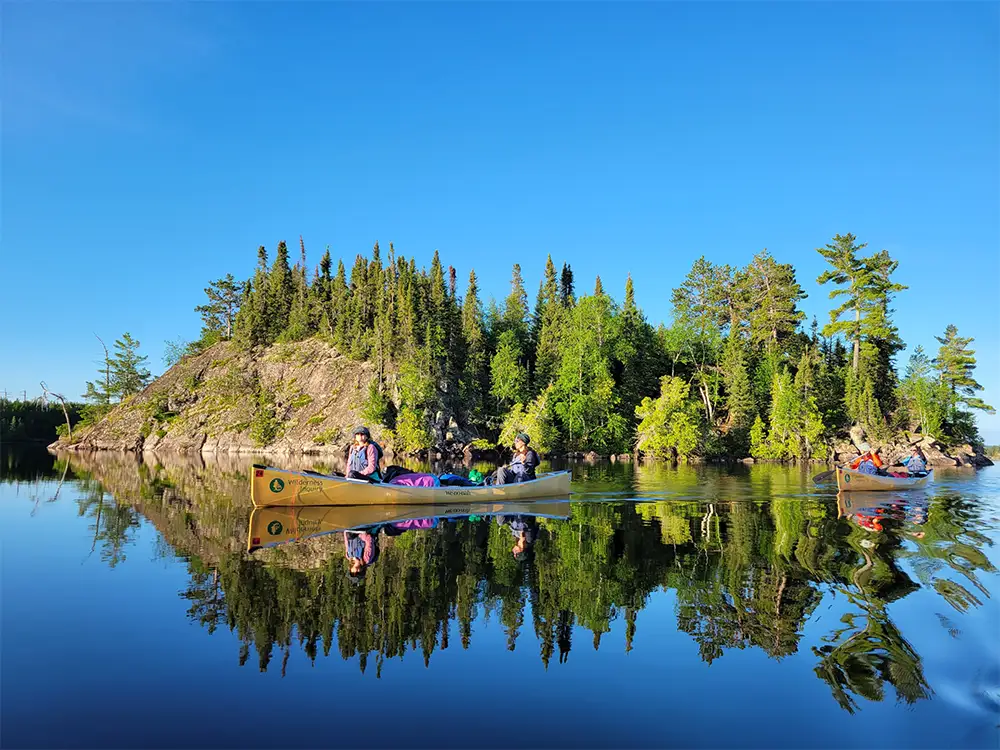
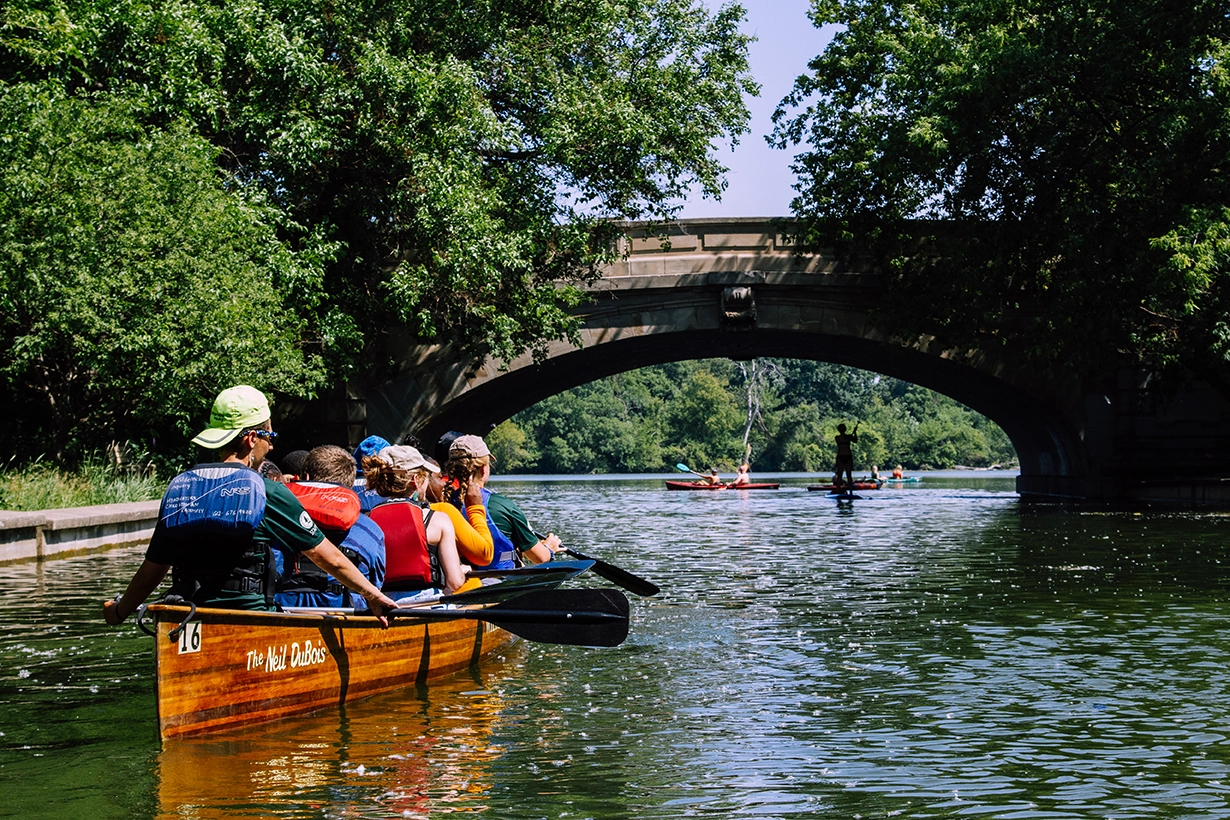
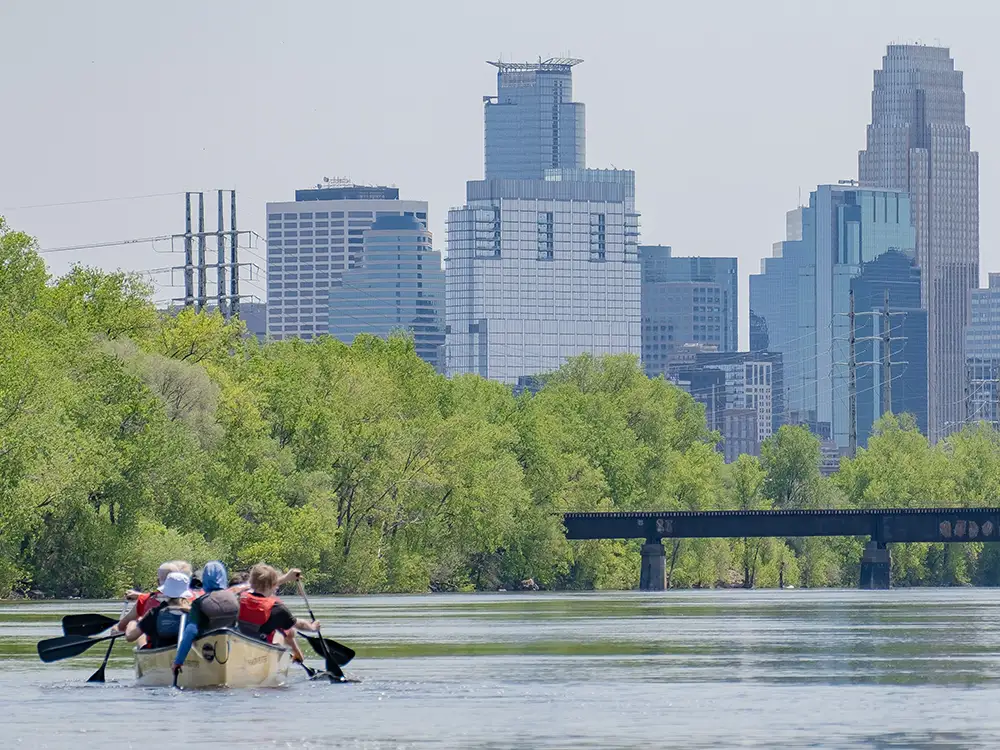
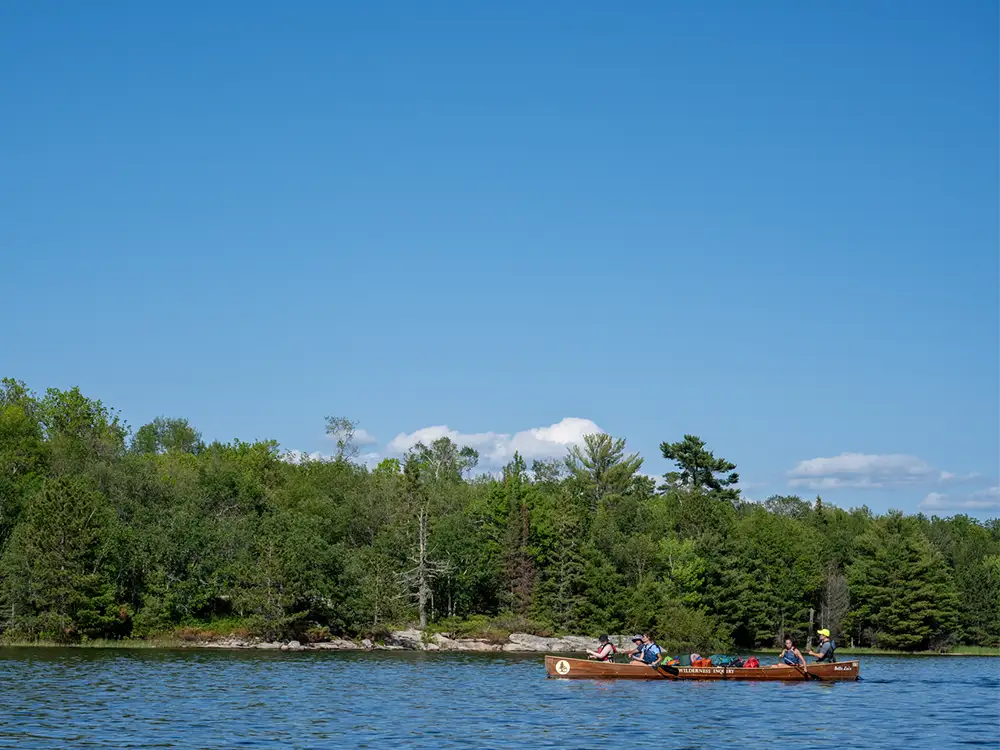
Looking for adventure in the heart of the Twin Cities? Explore the Mighty Mississippi River up close and personal on a half-day guided canoe trip. Paddling the Mississippi in one of our beautiful 24-foot cedar strip canoes is easy, fun, and affordable--everyone enjoys it! Built by hand in St. Paul, MN, these Voyageur canoes seat up to nine people. You’ll be paddling in community!
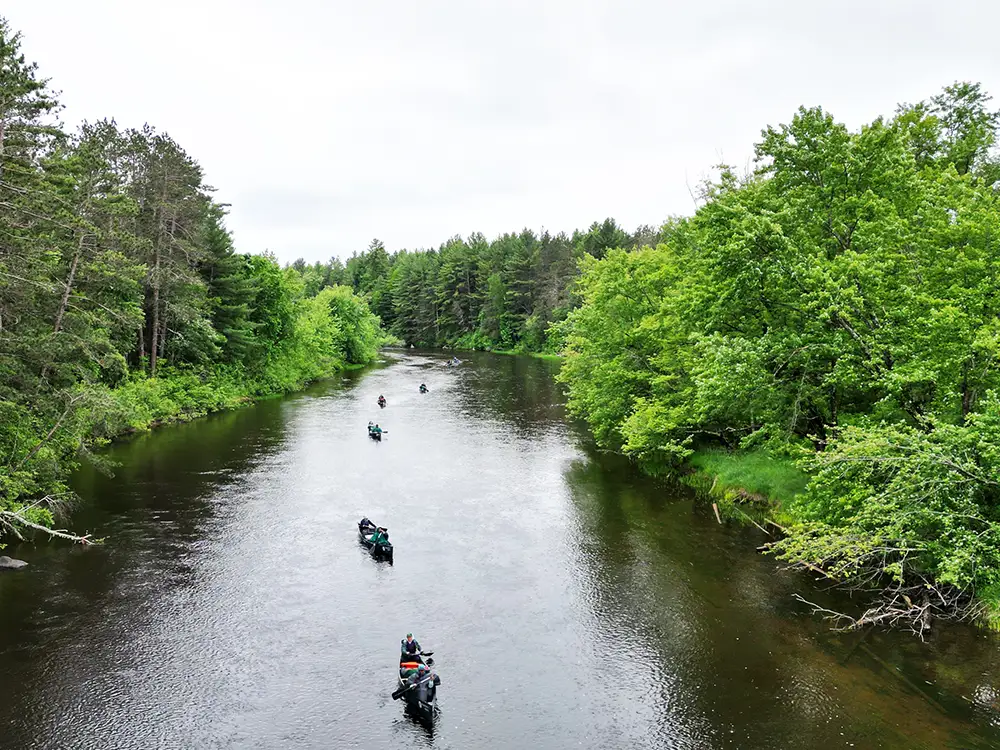
These popular adventures take place in our local National Park – the Mississippi National River and Recreation Area (MNRRA) – an urban gem that winds its way through our cities from Coon Rapids to Hastings. You will discover wildlife—eagles, heron, fox, mink, and turtles—to name just a few. Experience the amazing human history of the River and learn how those who paddled before us have used it. You and your kids will be amazed at the story the river tells!
How it Works: You will paddle one of three routes that are chosen depending upon water levels and other factors. Each route takes 3-4 hours, with about 2 hours of actual paddling time. We provide water and snacks, but you should bring a bag lunch—coolers are provided. There are bathrooms at the beginning and end of each trip. We will shuttle you back to your car after the trip is over. Detailed instructions on your route and where to meet will be sent upon confirmation of your participation.
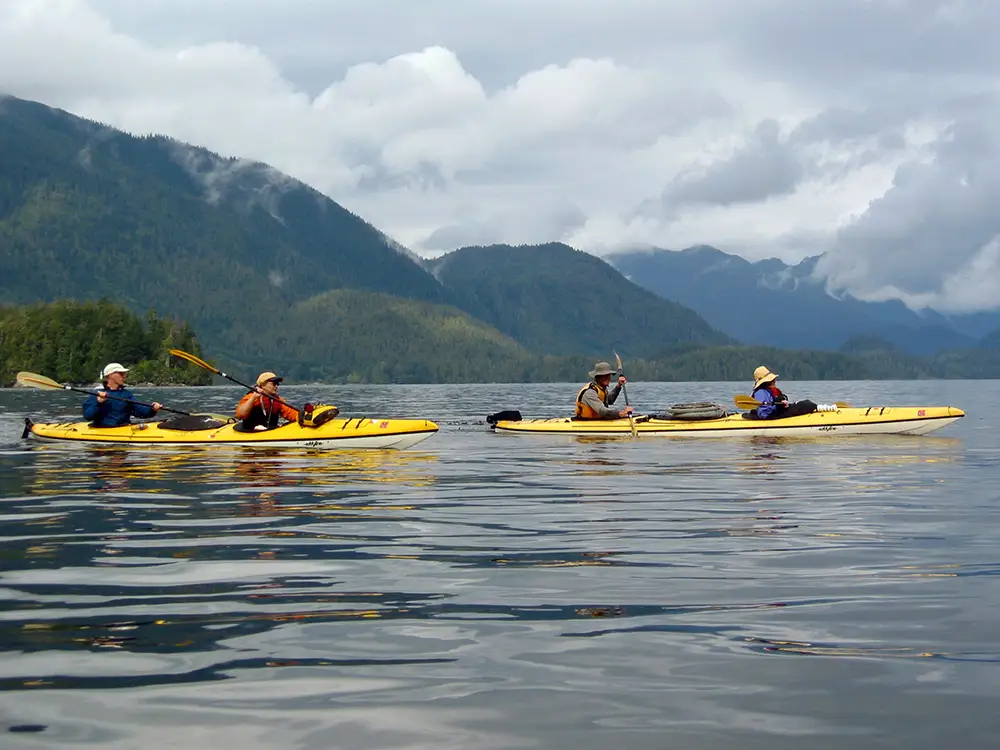
The trip will start with paddling and safety instruction provided by Wilderness Inquiry guides. There will be a trained guide in the stern (back) of each canoe to ensure safety and a fun trip for everyone. National Park Service Rangers will accompany us on most trips to provide cultural and natural history interpretation.
These trips fill up quickly. We encourage you to reserve your spot today!
Sample Itinerary
Provided below are examples of the three main routes we paddle. Click on the trip you want to see the route. Each route takes 3-4 hours, with about 2 hours of actual paddling time. We will send you detailed instructions on your route when you register.
Upper Route: Brooklyn Park to Boom Island
Middle Route: East River Flats to Sand Flats
Lower Route: Hidden Falls to Harriet Island
Travel, Terrain, Etc...
No previous experience is needed to participate in this trip. You will be paddling in 24-foot Voyageur canoes, following the river's 3-4 mph current as it winds along the shoreline. The voyageur canoes hold 6-10 paddlers. They are fast and stable boats, designed specifically for trips on big or moving water. Paddling distance is 4-8 miles, depending upon the route we do. It is active but not strenuous.
There is no hard age limit, but we recommend the event for ages 5 and older. All participants must be able to wear a PFD and be comfortable sitting in a canoe for at least one hour at a time.
Our trips are cooperative in nature. Groups consist of 6 to 60 participants, plus Wilderness Inquiry and National Park Service staff and volunteers.
Temperatures can vary greatly throughout the season. A suggested clothing list will be sent upon confirmation of your participation in the event.
There are some bathroom facilities at the put-in and take out places. Your group will stop prior to departing and again upon completion of the trip.
You may have heard that several species of “Asian Carp” are migrating upriver. In recognition of the importance of this threat to the lakes and rivers of north central Minnesota, Wilderness Inquiry has discontinued using the lock and dam system in order to slow the spread of Asian Carp.
A note about the itinerary: Our trips are real adventures in the outdoors. While we'll make every effort to follow the itinerary listed here, elements may change due to weather or reasons beyond our control.
[ Dates & Fees ]

Imagine exploring a ribbon of hidden wilderness in the heart of a large metropolitan area. In Minneapolis and Saint Paul, that ribbon of wilderness is the Mississippi River. The Mighty Mississippi remains the lifeline of the Twin Cities’ economic, cultural, and historical life, and today we can also paddle through it in our very own National Park, the Mississippi National River and Recreation Area. The park consists of 72 miles of river and its adjacent shorelines, with many unique scenic views, important historical sites, and diverse wildlife.
The river changes character dramatically within the park boundary. From the river’s humble beginnings at Lake Itasca in northern Minnesota, it enters the park fairly clean and wild north of Dayton, Minnesota, as a small prairie river. Moving through a mix of landscapes in Minneapolis, including an industrial area that marks the head of barge navigation, it thunders over Saint Anthony Falls, through the river’s tallest lock, and under the historic Stone Arch Bridge into a river gorge. It winds through this relatively tight and narrow canyon, where it is easy to forget that you are in a city, until its confluence with the Minnesota River below the restored and historic 1820s Fort Snelling. The sandstone and limestone cliffs stand fairly close to the river as it continues on the way to downtown Saint Paul, where the river valley opens up to the large floodplain river that meanders to the sea.
Archeological evidence suggests that people have lived by this river for nearly 12,000 years. Some of the earliest inhabitants may have seen the giant waterfall retreating up the gorge, dropping huge blocks of limestone as the edge wore away with a torrent of glacial meltwater over a thousand times greater than the flow of the current river. Known to the Dakota as Ha-Ha-Wakpa (meaning Waterfall River), native peoples used the Mississippi as a means of trade, travel, and for important religious practices for thousands of years before European explorers found it in the late 1600s. Dakota villages became important sites of trade and commerce with European and, later, American fur traders and remained so until treaties pushed the Dakota in 1851 to reservations along the Minnesota River. Desperate conditions and a failure by the U.S. government to fulfill treaty obligations to provide food led some Dakota people in 1862 to wage war against the new settlers. Their defeat led to a mass execution and the exile of nearly all Dakota from the state the following year. Recently, Dakota people from around the U.S. and Canada have begun to reconnect to their sacred places and relatives in Minnesota.
Its natural beauty made the Mississippi River an attraction for tourists and immigrants. In 1844, 41 steamboats docked at Saint Paul and by 1857 the young city served over a thousand steamboats annually. Yankee entrepreneurs may have appreciated the beauty but they also saw the river for its economic potential, especially the waterpower potential of Saint Anthony Falls. Lumber milling started first at the falls, but as vast quantities of white pine floated down the river from northern Minnesota, the industry moved to more efficient steam-powered mills along the river above the falls. Then the expanding flour milling industry quickly snapped up the waterpower of the falls. By 1899 Minneapolis led the nation in lumber production, and led the world in flour production. The Gold Medal and Pillsbury Best Flour brands -- processed with the power of the Mississippi -- soon became famous around the world. The steamboat era ended when railroads began to dominant transportation, but Saint Paul continued to grow along with Minneapolis as a major rail hub.
But as the big cities grew at Minneapolis and Saint Paul, the river suffered. By the time that Lock and Dam One was completed in 1916, only a few carp swam beneath the floating mats of raw sewage, oil, and mill waste that backed up behind the dam. No other fish could survive in such polluted waters and people avoided the stinking river. But due to a concerted community effort to clean it up, the Mississippi River is again home to an extremely diverse ecosystem. Once again, rare species of river mussels can find the diverse fish populations they need for part of their life cycles. Pelicans, herons, egrets, wild turkeys, and many species of ducks and song birds nest or migrate along the river flyway. Even in the heart of the city, it is common to see eagles soaring overhead as you paddle along the river. If you are lucky, you might spot a beaver, one of the playful river otters that are making a comeback, or a fox hunting along the shoreline. Rarely does an urban landscape allow for so many opportunities to view wildlife and natural scenery so easily.
Wilderness Inquiry, in cooperation with the National Park Service and the Mississippi River Fund, created the Urban Wilderness Canoe Adventures (UWCA) program for Twin Cities youth. Each UWCA trip provides students an opportunity to uniquely experience the Mississippi River while strengthening their outdoor skills and encouraging an active lifestyle outdoors. Thousands of UWCA participants have re-discovered the hidden ribbon of wilderness that is the Mississippi River.
For more information, visit these links:
Geology and History of the Mississippi River in the Twin Cities
Mississippi National River and Recreation Area
UWCA: Urban Wilderness Canoe Adventures
History of Ft. Snelling--very interesting!
Telling River Stories: People and Places Along the Mississippi River
Water levels at the Ford Lock and Dam #1
All about Asian Carp
[ Dates & Fees ]