home   register   about us   programs   get involved   support wi   news   contact us 
General Trip Info

Kenya Safari

See the big five with this tour of East Africa's best National Parks

Click any thumbnail for larger image:


Maasai men jumping in Nguramon on Kenya Safari.
photo by: Walz, A

Grazing Rhino on Kenya Safari.
photo by: Walz, A

Pelican approaching for a landing - Nakuru National Park
photo by: Walz, A


photo by: Walz, A

Rick checks out the birdlife at Lake Nakuru - Nakuru National Park
photo by: Walz, A

Sunset over Mt. Kenya.
photo by: Walz, A

Investigating a hippo that has left the water early for night grazing - Nakuru National Park
photo by: Walz, A


photo by: Kay, S

Flamingos on Lake Nakuru - enough said! - Nakuru National Park
photo by: Walz, A

Maasai elder drinking honey beer from a gourd on Kenya Safari.
photo by: Walz, A

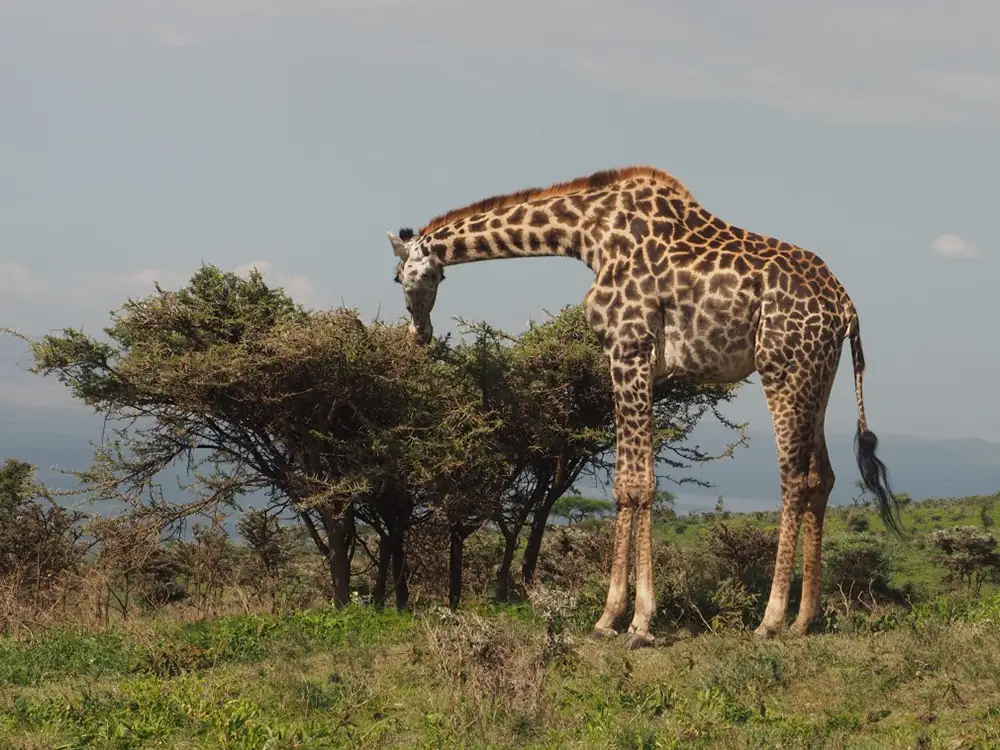
Giraffes out for a stroll on Kenya Safari.
photo by: Walz, Joe

Viewing wildlife from a pop top safari van - Nakuru National Park
photo by: Walz, A


photo by: Walz, A

Zebra in Nakuru National Park
photo by: Walz, A

Nakuru is world renowned for birdlife
photo by: Walz, A

Page 1 of 7 | Next | Last


[ Dates & Fees ]

Kenya Safari

See the big five with this tour of East Africa's best National Parks

This is another culture. Another continent. A world you've only seen in pictures: grassy steppes, tall mountains, beautiful people, lions, giraffes, rhinos. This is East Africa. Watch the sun set over the plains, view animals from on foot and from four-wheel drive vehicles, and stay in comfortable lodges. You'll make friends of people from Maasai, Samburu, and Kikuyu communities. Wilderness Inquiry teams up with the best local guides in Kenya to offer this once-in-a-lifetime experience.

Sample Itinerary

Please note: While the itinerary presented is an accurate depiction of what your trip will be like, it is only an example. Our trips are real adventures in the outdoors--not pre-packaged tours that happen on a schedule.

DAY 1: Your guides will meet you at the Jomo Kenyatta International Airport around 8:00 pm in Nairobi. They'll take you out to dinner and to a comfortable hotel in Nairobi where you can quickly recover from any jet lag you might have.

DAY 2: Leave Nairobi, passing through the coffee farms and tea farms of the central highlands. You will have a chance to interact with local farmers and learn about their work. Stop over in Karatina, a town in central Kenya named for the largest market in Africa. Head to Naromoru and spend the night at Naromoru River Lodge near the base of Mount Kenya. The rushing Naromoru River will lull you to sleep.

DAY 3: Visit Kambi Primary School where Muthoga, one of our guides, attended school as a child. You'll have a chance to tour the school and possibly listen to a performance from class choir groups. Have tea with the headmaster and leave a donation of some much-needed school supplies before continuing on to Sweetwater Sanctuary. In Sweetwater, get your first chance to spot animals and meet some of Jane Goodall's chimpanzee refugees. You'll also be able to pet a tame, orphaned rhino and meet some warthogs up close. Take a walk on the equator on your way back. Spend the night again at Naromoru River Lodge.

DAY 4: Leave for Kenya's exotic Samburu National Reserve. The reserve is situated on the Ewaso Nyiro River, where there's plenty of water, trees and shade to attract wildlife like elephants, lions, gerenuks, giraffes and zebras from the surrounding savanna. Lions and leopards are also regularly spotted. Stay overnight at Samburu Game Lodge.

DAY 5: Spend the morning and evening combing the reserve for all types of African mammals. During the day you can relax by the pool. Before your evening drive you'll visit a Samburu village where you can experience the dancing, fire making, beadwork, and company of these distant cousins to the Maasai.

DAY 6: Leave early for Nakuru town but stop en route to explore Thomson's Falls. Spend some time in the Nakuru market buying fresh foods before heading into the park for dinner and sunset from Nakuru Guest House. Guests have spotted antelope, buffalo, hyena, and even rhino right from the dining room windows!

DAY 7: Get up early for a chance to see the sun rise over Lake Nakuru and spot animals like rhino, giraffe, baboon, and birds when they are most active. Circle the entire lake and attempt to count just how many thousands of pink flamingos there are. After the game drive, have lunch in Nakuru town and then continue on to Lake Naivasha and Crater Lake. Enjoy a boat cruise in the Crater Lake volcano oasis amongst Cyprus, flamingos and colobus monkeys. Return to Fish Eagle Inn in time to watch the hippos come out of Lake Naivasha to graze.

DAY 8: Leave Naivasha for the Maasai "city" Narok to meet up with Jonathon, your Maasai laiason. Tour Narok, pick up some gifts for your Maasai hosts and then continue on to Jonathon's boma. Here you will be introduced to the intricacies of Maasai life and have a chance to interact with the many young children from the different families living in Jonathon's boma. They will be excited to show you their homes and take pictures with you. Make a big fire and share a traditional goat roast with new friends. Come nightfall, Jonathon will share stories and songs about Maasai origin. You'll have the opportunity to sleep in a Maasai home or in comfortable camping arrangements.

DAY 9: After hot tea and breakfast you can help take the livestock out to graze and try your hand at milking. Walk down to visit the local school before heading off to the Masai Mara Reserve. The Mara is the Africa that you've seen in pictures and on TV. Rolling plains as far as you can see should bring sightings of all the "big five" and your best chance to see cheetah as well. Stay overnight at one of several spectacular Safari lodges.

DAY 10: In the morning you'll head all the way down to the Mara river. Walk a few steps into Tanzania and trek along the river banks searching for an answer to the age old question: who is king of the river? The hippo or the crocodile?

DAY 11: Head back to Nairobi stopping for scenic vistas of the fertile Great Rift Valley along the way. Enjoy a banquet at the Carnivore Restaurant (rated in the top 100 in the world). You'll have a chance to taste local game and drink dawas... the perfect closure to an amazing African adventure.

DAY 12: Visit the Giraffe Center and then shop the Nairobi city market for curios to bring home. Dine at traditional "nyama choma" (BBQ) restaurant before catching the evening flight to Amsterdam to arrive home the following day.

Travel, Terrain, Etc...

TYPE OF TRAVEL/DISTANCE: Travel between destinations is provided in four-wheel drive vans where everyone has a window seat. For the safari section we'll open the roofs of these same vehicles.

WEATHER: In the area where most safaris take place, it gets very hot when the sun reaches its peak during midday and cools dramatically at night (50º-95ºF). "Rainy Seasons" are roughly mid-March through April and October to December, but rain is possible year-round.

GROUP SIZE: The group size ranges from 7 to 12 participants, plus 1 Wilderness Inquiry staff. Each group consists of people of various ages, backgrounds and abilities, including people with disabilities.

LEVEL OF DIFFICULTY: East Africa is a welcoming escape for travelers of all levels of experience. No previous experience is necessary.

VISA REGULATIONS: Citizens from most countries are required to obtain a visa costing $25 USD. Visas can be obtained in advance or directly on entry. Make sure that your passport is valid for at least six months starting from the date of entry.

HEALTH: Check with your doctor at least one month prior to leaving to ensure that your immunizations are up to date. During the safaris there is the possibility of exposure to malaria-carrying mosquitos and thus you will also need to bring an anti-malarial medication.

Wilderness Inquiry is proud to serve Caribou Coffee on all our trips. Great food, great coffee, and great company are just some of the ingredients that make Wilderness Inquiry trips special.

[ Dates & Fees ]      


Mt. Kenya

Mt. Kenya is an imposing extinct volcano dominating the landscape of the Kenyan Highlands east of the Rift. Mt. Kenya lies about 140 km NNE of Nairobi with its northern flanks across the Equator. The mountain has three main peaks - Batian (5200m), Nelion (5188m), and Point Lenana. The mountains slopes are cloaked in forest, bamboo, scrub and moorland giving way on the high central peaks to rock, ice and snow. Mt. Kenya is an important water catchment area.

The park, inscribed by UNESCO as a World Heritage Site in 1997, is also a Biosphere Reserve that covers 715 square km. It includes the peaks consisting of all the ground above 3200m with two small salients extending lower down to 2450m along the Sirimon and Naro Moru tracks. Surrounding the park is Mount Kenya National Reserve with an area of approximately 2095 square km.

Lake Nakuru

Lake Nakuru lies on the belly of the Great Rift Valley only three kilometers south of Nakuru Town. The park was established in 1960 as the first bird sanctuary in Africa, later becoming a National Park in 1967. It is comprised of the lake surrounded by areas of sedge, reeds, marsh and wooded grasslands, broken here and there with rocky cliffs. The population of flamingoes fluctuates from year to year when some of them migrate up and down the Rift Valley visiting other lakes like Lakes Magadi, Elementaita, Bogoria, Turkana or Natron in Tanzania.

Even when the flamingo population is relatively low, the lake is worth a visit as there are well over 400 species of other birds. Some of the mammals found in this park are: the black-faced velvet monkey, blue or skyes monkey, olive baboon, black and white colobus monkey, jackals, bat-eared fox, eland, buffalo, giraffe, rhino, and leopard. Common birds include: eagles, hawks, ducks, buzzards, plovers, sandpipers, cuckoos, kingfishers, bee eaters, honey guides, super starlings, spekes weaver, comorants, storks, and sunbirds.

The park has been established as a special rhino sanctuary where over 35 Black Rhino and about 10 White rhino have been placed behind electric fencing, safe from poachers. It is possible to drive around the lake, stopping at the bird watching hides along the northern and western lakes shores.

Lake Naivasha

Thick Papyrus fringe beautiful, freshwater Lake Naivasha. The lake is almost 13 kilometers across, but its waters are shallow with an average depth of five meters. Lake area varies greatly according to rainfall. Afternoon wind and storms can cause the lake to become suddenly rough and produce high waves. For this reason, the local Maasai christened the lake, Nai'posha, meaning 'rough water,' which the British later misspelled as Naivasha.

At the beginning of the 20th Century, Naivasha completely dried up and effectively disappeared. The resulting open land was farmed, until heavy rains a few years later caused the lake to return and swallow up the newly established estates. The lake and its surrounds are rich in natural bounty, and the fertile soils and water supply make this one of Kenya's prime agricultural regions.

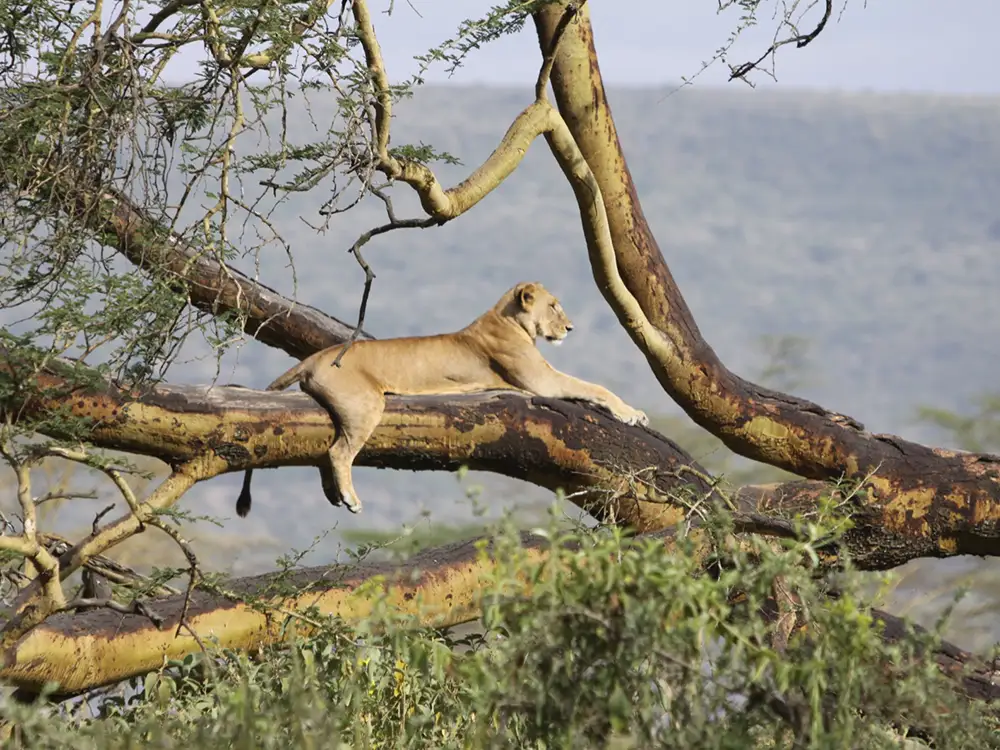
Much of the lake is surrounded by forests of the yellow-barked Acacia Xanthophlea, known as the yellow fever tree. These forests abound with bird life, and Naivasha is known as a world class birding destination. The waters of the lake also draw a great range of game to these shores. Giraffes wander among the acacia, buffalo wallow in the swamps, and Colobus monkeys call from the treetops while the lake's large hippo population sleep the day out in the shallows.

Maasai Mara National Game Reserve

The Maasai Mara is located about 270 kilometers west of Nairobi, and extends to the Serengeti ecosystem in Tanzania. Maasai Mara was established as a National Game Reserve in 1974 and covers an area of 1,510 sqare kilometers. The Maasai Mara is at an altitude of 1650 meters (5210 ft), and is crossed by two permanent rivers, the Mara and Talek.

All the commonly seen mammals of Kenya are found in the Reserve. The only exceptions are those that live in dry areas or are restricted to the northern parts of the country such as reticulated giraffe, gerenuk, grevy zebra, side striped jackals, and others. Maasai Mara hosts over 480 bird species. The most common species include: Secretary bird, Vultures, eagles, Guinea fowls, Ground hornbills, Bustards, Somali ostrich, Herons, Ibis, ducks, geese, plovers, sandgrouse, rollers, Kingfishers and many others.

The Maasai Mara is endowed with a great variety of nearly all plains game and offers a wide choice of food for the predatory lion, leopard, cheetah, hyena, wild-dog, jackals and thousands of the other lower carnivores. The Mara River, which is frequently flooded during the rains, houses schools of hippo and large colonies of crocodile. The Mara's major attraction is the world famous and most spectacular annual migration of nearly two million wildebeest and zebras from Serengeti National Park in Tanzania to the reserve (July to September) and back to Serengeti in January and February.

The herds turn northwards before reaching Lake Victoria and cross the Mara River into Kenya, looking for green pastures in the Maasai Mara. When the herd leaders smell the short rains of October, they command their herds southeastwards across Olduvai Gorge back to Serengeti. It was in the Olduvai Gorge where Dr. Louis Leakey discovered the remains of early man and some bones of wildebeest all dating back to two million years, thus proving that the Serengeti-Mara wildebeest migration has existed for millions of years.

During the annual migration, these animals are followed by hyenas, lions, wild dogs and vultures. Safari visitors to Mara in August through September will certainly see the splendor of this natural phenomena happening as it was hundreds of years ago. Apart from the migratory animals Maasai Mara is rich in resident game with over 95 species recorded in the Reserve.


For more information, visit these links:

Kenya Tourist Board -- Official Website

Kenya Wildlife Service

Useful Swahili

[ Dates & Fees ]


2010 Dates   Fee  
09/05/2010 - 09/16/2010 $2695
09/19/2010 - 09/30/2010 $2695
09/30/2010 - 10/10/2010 $2695
2011 Dates   Fee  
01/04/2011 - 01/15/2011 $2695 Register Now
09/11/2011 - 09/22/2011 $2695 Register Now

Transportation

This trip includes airport transfer from Jomo Kenyatta Airport in Nairobi, Kenya, on the first evening of the trip. To make your travel arrangements for this trip we recommend that you consult with our travel agency, Travel One (800-245-1111). They are very familiar with our trips and can help you make the best flight connections at the best prices. Detailed meeting place instructions will be sent to you when you are confirmed for the trip.

Meeting Places: Additional Round-trip Fee:
Jomo Kenyatta International Airport Nairobi $0 (No charge)
Printer Friendly Page
printer friendly
Quick Trip Facts:
  • 12 days, 11 nights
  • Professional Kenyan safari guides and cultural liaisons
  • Accommodations in high-quality hotels, a guest house, and lodges (some groups spend 1-2 nights camping)
  • Meals and snacks
  • Transportation in safe, quality vehicles operated by professional drivers
  • Adaptive equipment as needed