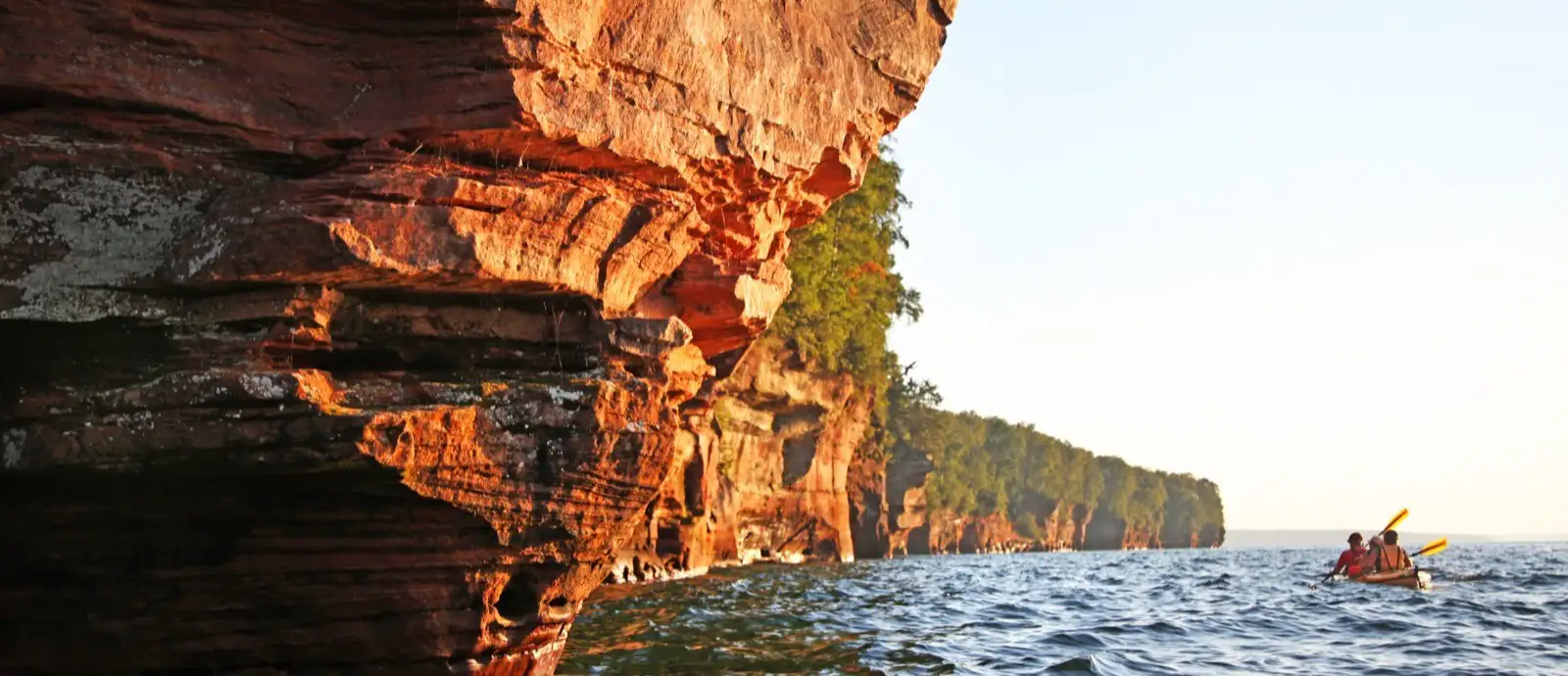
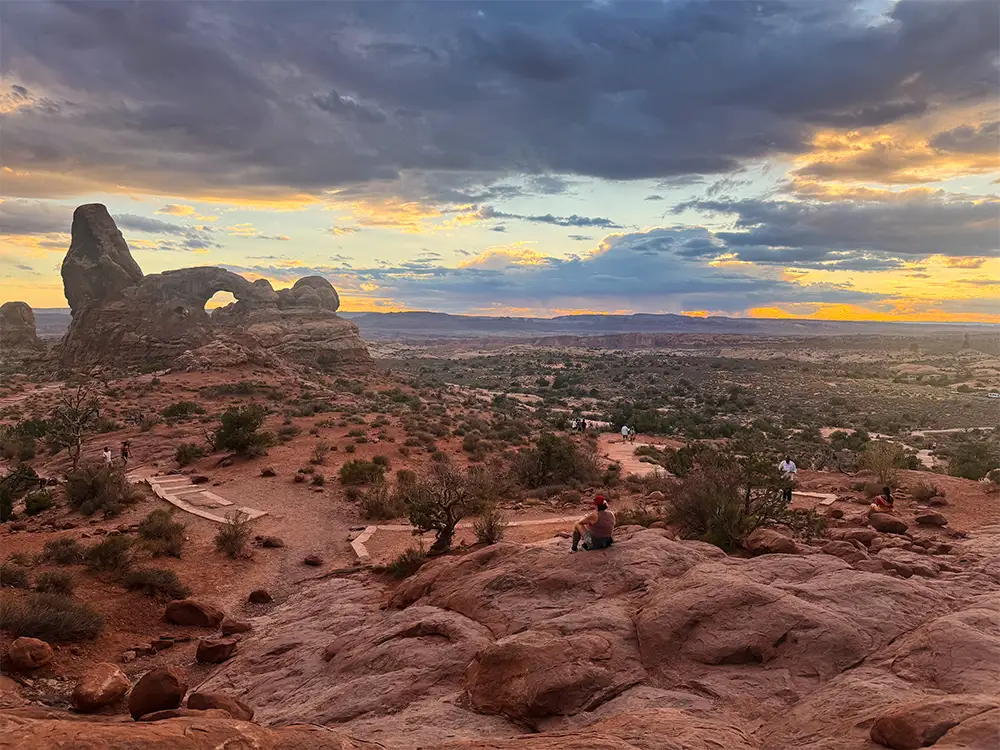
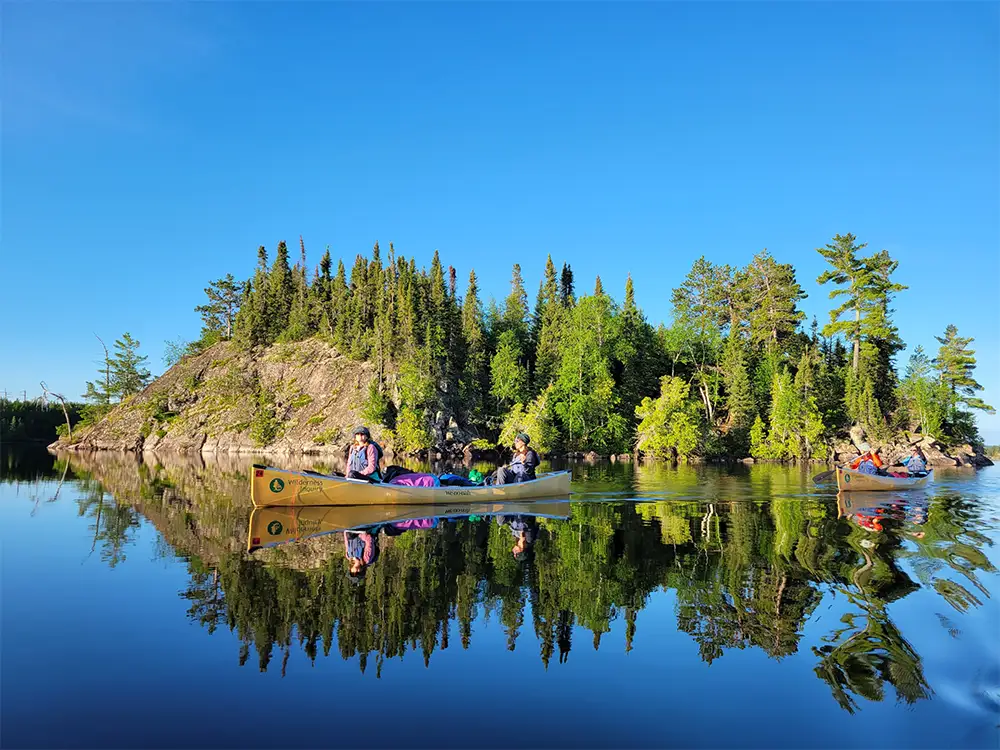
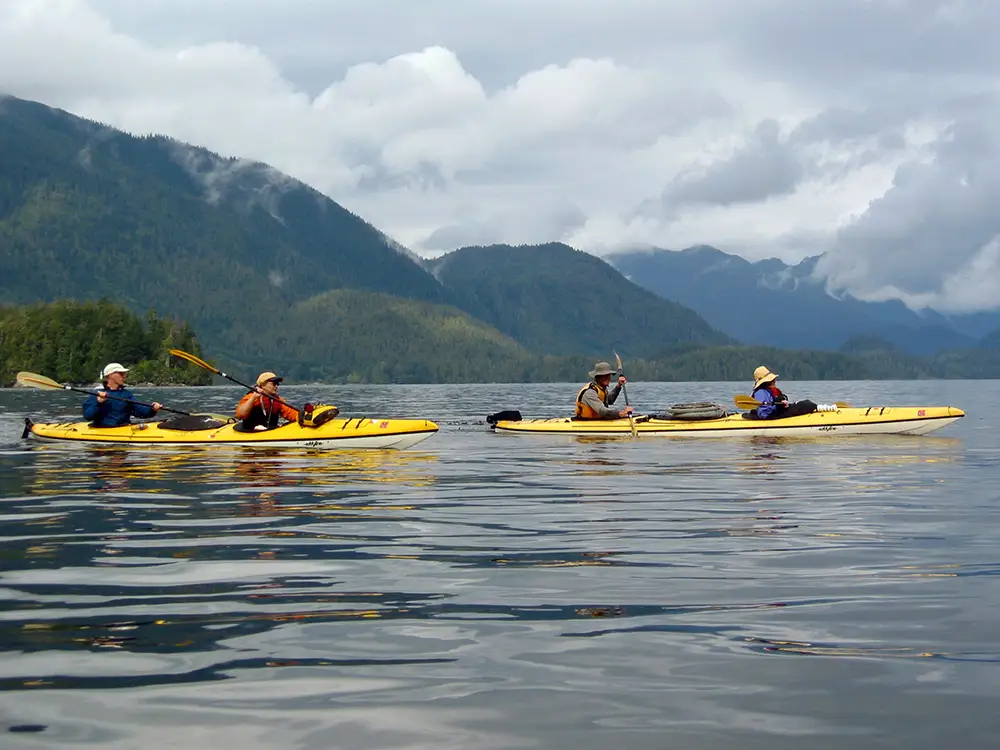
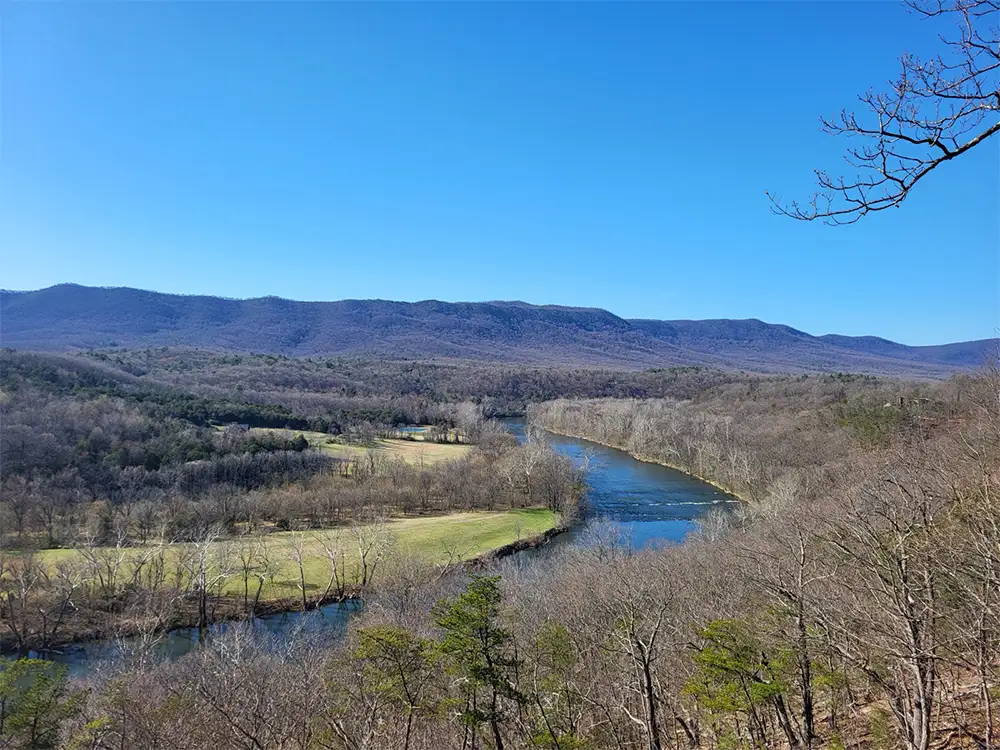
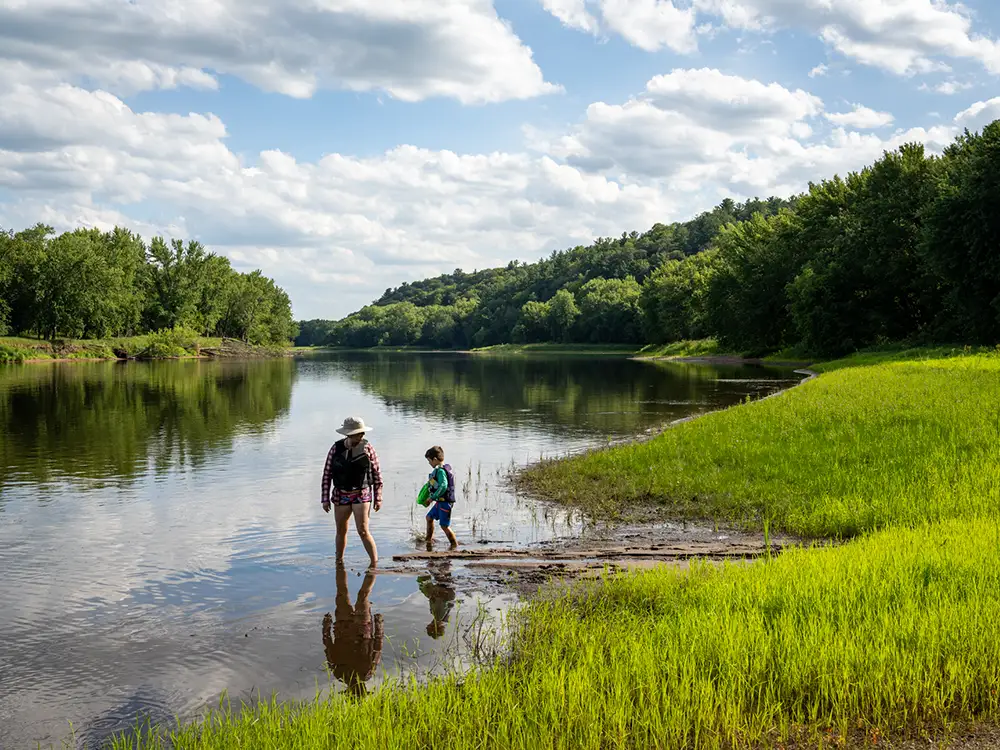
Think the photos from Mars are stunning? Check out the Green River and discover why this trip is one of WI's favorite destinations. Paddle the river as it slices through Canyonlands National Park on its way to the confluence with the Colorado River. See layers of exposed red rock formations at every turn, investigate cliff side Anasazi ruins, and explore magnificent side canyons. Examine graffiti from early European travelers etched beside Native American petroglyphs on the canyon walls. View sights like the 'Butte of the Cross' named by John Wesley Powell in 1869. Spend a day hiking near Turk's Head and paddle down river to Jasper Canyon. Trip fee includes jet boat shuttle back up the Colorado River to Moab, Utah.
Sample Itinerary
Please note: While the itinerary presented is an accurate depiction of what your trip will be like, it is only an example. Our trips are real adventures in the outdoors--not pre-packaged tours that happen on a schedule.
DAY 1: Your trip begins in Moab where you will board a shuttle to Mineral Bottom Landing on the Green River. You will participate in a canoe orientation before paddling through Horsethief Bottom to Fort Bottom.
DAY 2: Paddle down river with views of the "Butte of the Cross," named by Powell in 1869. The White Rim Sandstone will begin to appear today. This layer of rock is 240 million years old. Spend the evening at Anderson Bottom.
DAY 3: Enjoy a layover day exploring Anderson Bottom. Here is where the river deviated from its original course, shortening your route by 2 miles, This is a great place to study the geology and plant life of the canyon. There are petroglyphs nearby and a small slot canyon. Cool off in the afternoon with a dip in the river.
DAY 4: Paddle around Bonita Bend, where the river flows from Labyrinth to Stillwater Canyon. Float past the Anasazi granaries built into the cliffs near Valentine Flats. Spend the night at Turks Head or Deadhorse Canyon.
DAY 5: See the petroglyphs at Deadhorse Canyon up close. Paddle down river to Jasper Canyon, our last campsite on the Green. We may arrive by mid-afternoon and have time to explore the nearby ruins.
DAY 6: Paddle the last nine miles to the confluence of the Green and Colorado Rivers. Load the gear onto a jet boat to take us upstream on the Colorado River to Potash Landing. Your trip officially ends in Moab, UT in the early evening.
Travel, Terrain, Etc...
TERRAIN/ROUTE CHOICES: The Canyon lands are made up of sandstone cliffs, some of which are over a thousand feet high, with side canyons leading back into intimate passages. You will camp on either rock plateaus or sandy beaches. Boat landings are often muddy. The river runs more swiftly in the spring than in the fall. Depending on the water level, you may have a couple areas of swift water, or even rapids. The Green River offers a variety of daily route options from easy to very difficult.
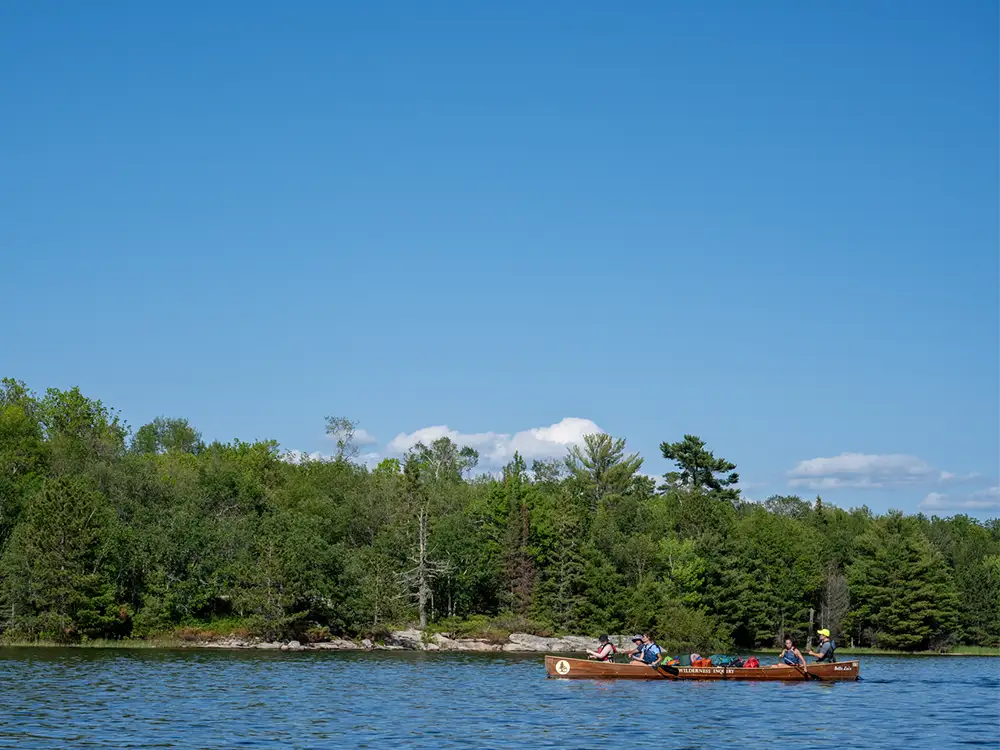
TYPE OF TRAVEL/DISTANCE: You will travel in 17-foot Old Town Tripper canoes, which hold two to three paddlers, plus all necessary gear. An average day's travel consists of 4-7 hours of paddling, depending on wind and weather. Travel distances vary from 8 - 12 miles per day with the exception of scheduled layover days. You should have at least one layover day to explore the surrounding canyons and Indian ruins. To protect the environment, WI uses Leave No Trace camping techniques.
WEATHER: Temperatures range from 30 F (evenings) to 90 F (days) in the spring and fall. Be prepared for unpredictable weather, such as sudden thunderstorms or windstorms in the summer or snow storms in the spring and fall.
LODGING/BATHROOM FACILITIES: This is a camping trip. At night you will sleep in a comfortable Eureka Timberline tent. Typically, there are 3 people per 4 person tent (although other arrangements can be made). We recommend that you bring your own personal sleeping bag and "camprest" foam core inflatable mattress (a limited number of sleeping bags and mattresses are available as loaners for individuals who need them). Bathroom facilities consist of an outhouse or a foldable commode chair set up in a privacy tent. We make every effort to ensure privacy and cleanliness. After the trip, showers are available at the campground in Moab.
GROUP SIZE: The group size ranges from 10 to 12 participants, plus 2 or more Wilderness Inquiry staff. Each group consists of people of various ages, backgrounds and abilities, including people with disabilities.
CAMP CHORES: Our trips are cooperative in nature. WI staff will assist you in whatever areas you need, however most people pitch in where they can. Part of the adventure involves learning about daily camp activities.
EQUIPMENT AND CLOTHING: If you are new to outdoor activities, you need not spend a lot of money on gear. Wilderness Inquiry will provide all necessary canoeing and camping equipment. All you need to provide is your personal gear, such as clothing and a sleeping bag. A detailed equipment list will be sent to you upon confirmation of your participation. If you need to borrow personal gear, that can usually be arranged.
LEVEL OF DIFFICULTY: No previous experience is needed to complete this trip.
 |
Wilderness Inquiry is proud to serve Caribou Coffee on all our trips. Great food, great coffee, and great company are just some of the ingredients that make Wilderness Inquiry trips special.
|
[ Dates & Fees ]

The Green River, beginning in the Wind River Mountains of Wyoming, cuts almost directly South through the Colorado Plateau on its 730 mile path to its confluence with the Colorado River. We paddle the final stretch of the Green, along the last sixty miles before the confluence in Canyonlands National Park. Throughout this section, the Green River cuts through the Colorado Plateau. In places it is boxed in by canyon walls 2000 feet high which portray a dramatic chronology of the geological epochs of the last 300 million years.
300 million years ago, the area that now comprises the Colorado Plateau (the dominating feature of the Northern Southwest) was covered with ocean. The ebb and flow of this ancient ocean deposited considerable beach sands, marine limestone (calcium carbonate) and other minerals. Following the retreat of the oceans, the erosion of the Ancestral Rocky Mountains also added layers to the Colorado Plateau. Although the proto-Green and proto-Colorado Rivers did form at this time, it was not until 10 million years ago that the rivers began to cut their characteristic canyons. This accelerated erosion was caused by the uplifting of the Colorado Plateau.
Far below the dry plains of the Colorado Plateau, the ecosystem of the river basins and surrounding canyons is teeming with life. The most apparent vegetation along the rivers remains the tamarisk tree (also called Saltcedar) which forms dense thickets along the river bottoms. Interestingly, the tamarisk is a native of South Asia, and was introduced to the United States for erosion and flood control. The tree's ability to reproduce rapidly, recover after fire and hoard large quantities of ground water allow it to out-compete the native cottonwoods. In addition to trees, the river bottoms host a wide variety of cacti and other succulents. In the springtime, many species of cactus flower display a startling variety of red, pink and orange blossoms.
Many birds and other animals can also be seen along the river, including the Big Horn Sheep, Beaver, Canada Goose, Great Blue Heron, lizards and snakes. Also of note throughout the area is an interesting community of microorganisms that form patches of cryptogamic soil. These colonies of cyanobacteria form in thin sheaths across the desert floor, absorbing nutrients over hundreds of years. During rainy periods, they swell up to ten times their normal size. As they mature, other plants can grow through them symbiotically by enhancing the host's root system and by tapping into plants' roots for nutrients. These occur in patches of dark, spongy crusts in open areas. Take care not to step on them!
Suggested reading list:
Baars, Don. (1989) Canyonlands Country. Canon Publishers: Lawrence, Kansas.
Belknap, Bill., Belknap, Buzz. (1974) Canyonlands River Guide. Westwater Books: Evergreen, Colorado.
Belknap, Buzz., Evans, Laura. (1978) Desolation River Guide. Westwater Books: Boulder City, Nevada.
Belknap, Buzz., Evans, Laura. (1980) Dinosaur River Guide. Westwater Books: Evergreen, Colorado.
Cunningham, Richard L. (1990) 50 Common Birds of the Southwest. Southwest parks and Monuments Association: Salt Lake City, Utah.
Hoffman, John F. (1985) Arches National Park. Western Recreation Publications: San Diego, California.
Houk, Rose. (1992) Anasazi Prehistoric Cultures of the Southwest. Southwest Parks and Monuments Association: Tucson, Arizona.
Kelsey, Michael R. (1991) River Guide to Canyonlands National Park and Vicinity. Kelsey Publishing: Provo, Utah.
MacMahon, James A. (1988) Deserts. Alfred A. Knopf: New York, New York.
McPherson, Robert S. (1992) Sacred Land Sacred View. Brigham Young University/ Signature Books: Salt Lake City, Utah.
Niehaus, T., Ripper, C., Savage, V. (1984) Southwestern and Texas Wildflowers. Houghton Mifflin Company: New York, New York.
Noble, David Grant. (1995) Ancient Ruins of the Southwest. Northland Publishing: New York, New York.
Peterson, Roger Tory. (1990) Western Birds. Houghton Mifflin Company: Boston, Massachusetts.
Powell, J.W. (1961) The Exploration of The Colorado River and its Canyons. Dover Publications: New York, New York.
Stall, Chris. (1990) Animal Tracks of the Southwest. The Mountaineers: Seattle, Washington.
Stokes, Lee. (1969) Scenes of the Plateau Lands and How They Came to Be. Starstone Publishing: Salt Lake City, Utah.
Tweit, Susan J. (1994) The Great Southwest Nature Factbook. Alaska Northwest Books: Portland Oregon.
If you have other reading suggestions please let us know!
For more information, visit these links:
National Park Service - Official Canyonlands National Park Website
Canyonlands National Park
Go-Utah.com - Green River
Southern Utah Wilderness Alliance
Great Old Broads for Wilderness
[ Dates & Fees ]
WI leads trips to the Green River but typically only for pre-existing groups (schools, clubs, families, friends who travel together, etc...).
If you have a group of 8 to 12 people interested, we can set up a trip to the the Green River just for you! Typical cost for a 6-day trip is about $995 per person, which includes everything except transportation to Moab, Utah.
Please contact us if you are interested in a group trip to the Green River.
info@wildernessinquiry.org
612-676-9400
800-728-0719
(Join our waiting list to be notified when WI schedules a trip to Canyonland's Green River Canoe)